Learning & Training
Teach it however you like — the record lands in the same register
Two ways of teaching people something — a course they take on a phone between shifts, and a session somebody stands up and runs — and one place the result lands: the certification register. Nothing downstream can tell the two apart, which is the whole design. A fire drill on the jetty and a fire-safety course taken at midnight put the same row on the compliance matrix and the same certificate in the file.
See it live — demo in minutes →Sound familiar?
Training happened, and the only proof is a signing sheet in a drawer
The compliance grid says a credential is missing and the course that fixes it is a separate system nobody links to
Induction is one long PDF that nobody on a split shift ever finishes
Somebody asks which of your chefs can actually run a HACCP check and the answer is a guess
The training budget is spent by September and nobody saw it coming
Capabilities
What you get
9 capabilities
The register is the ledger; delivery is pluggable
A course that teaches a credential files a register row when somebody finishes it. A session that certifies something files one for everyone who turned up. HR typing in a paper certificate files the same row, and so does an external LMS posting to the API. From there the compliance matrix, the expiry ladder, the renewal chain and the report builder treat all four identically — because they cannot tell which produced what.
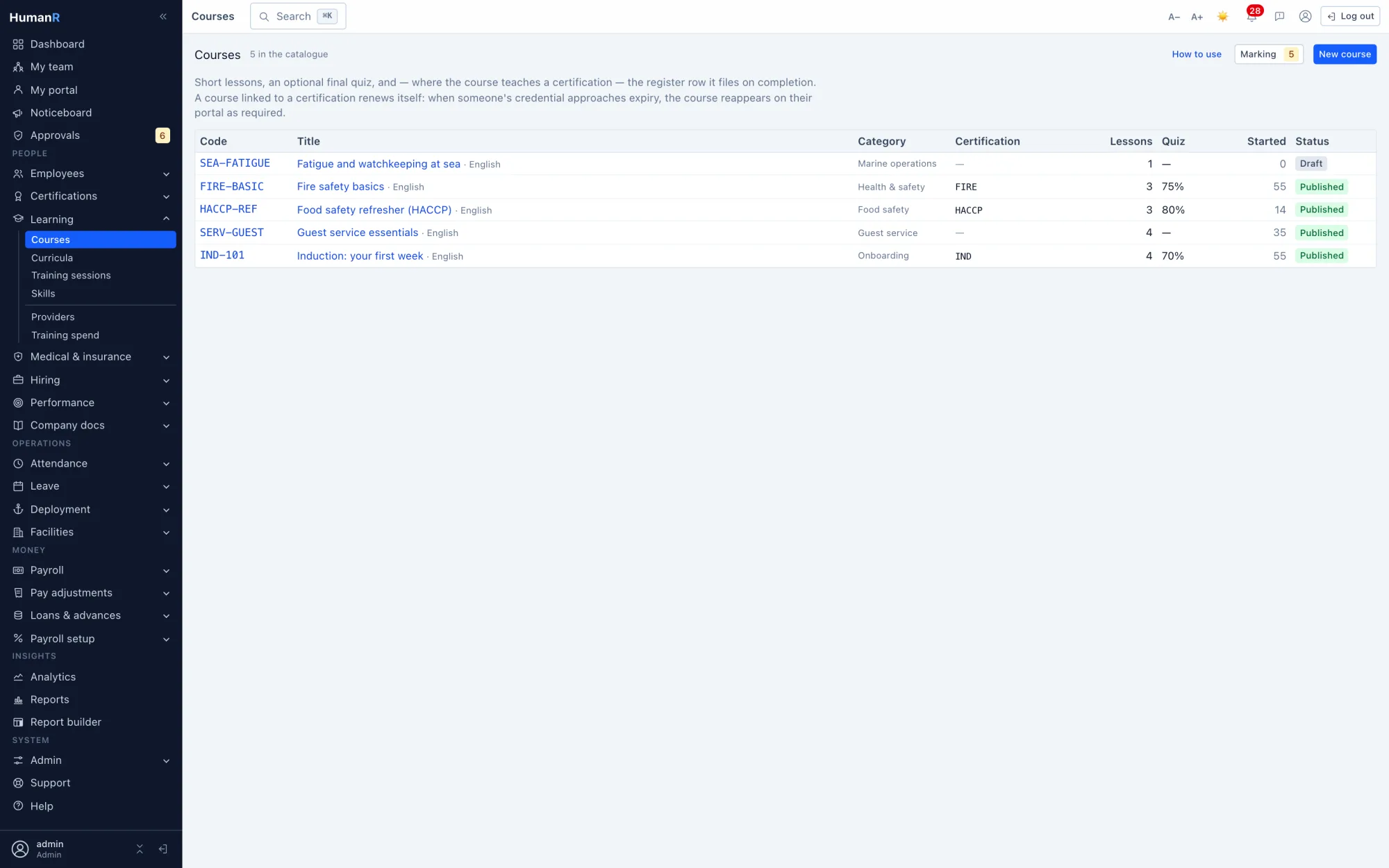
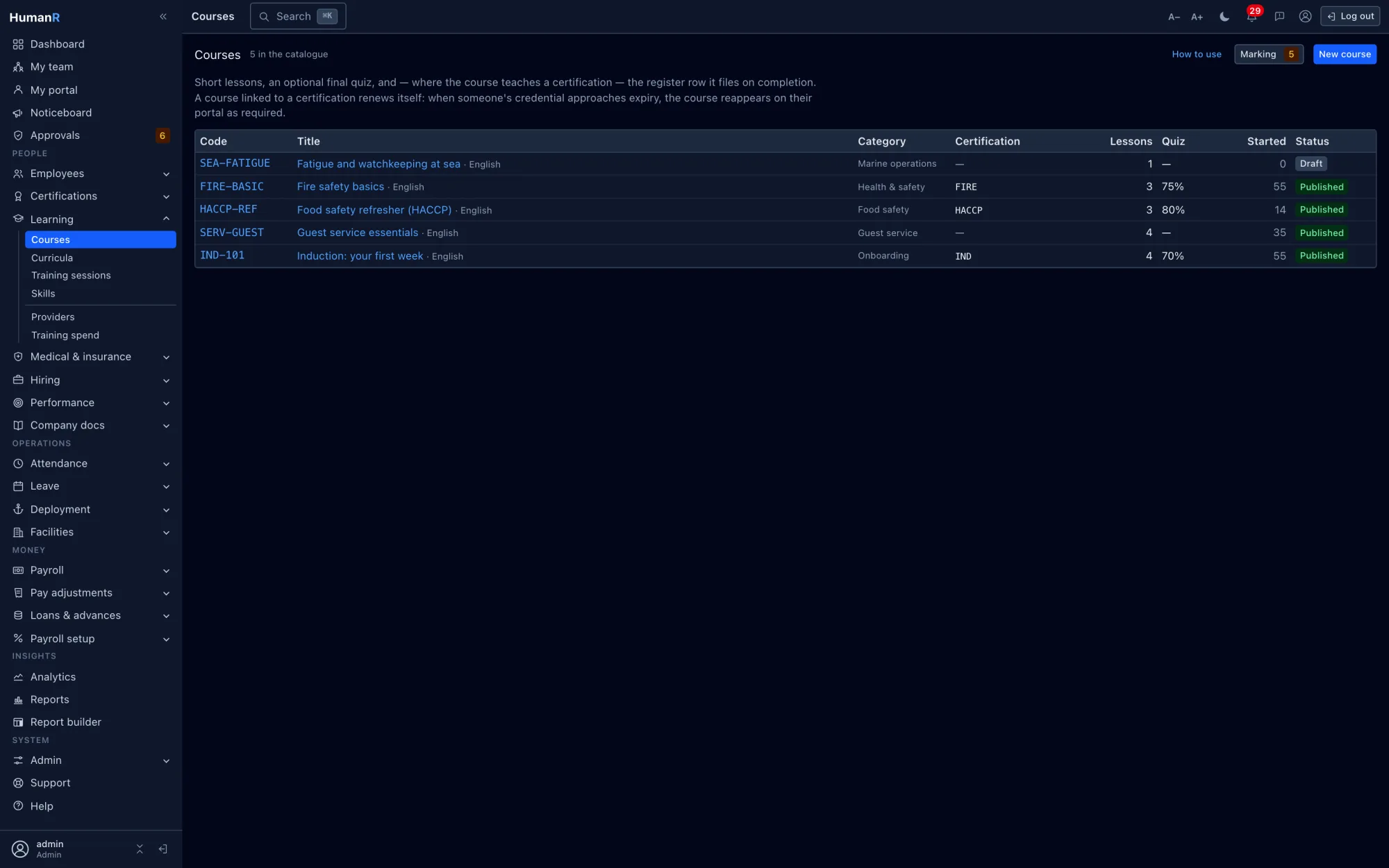
Courses built from short lessons, resumable between shifts
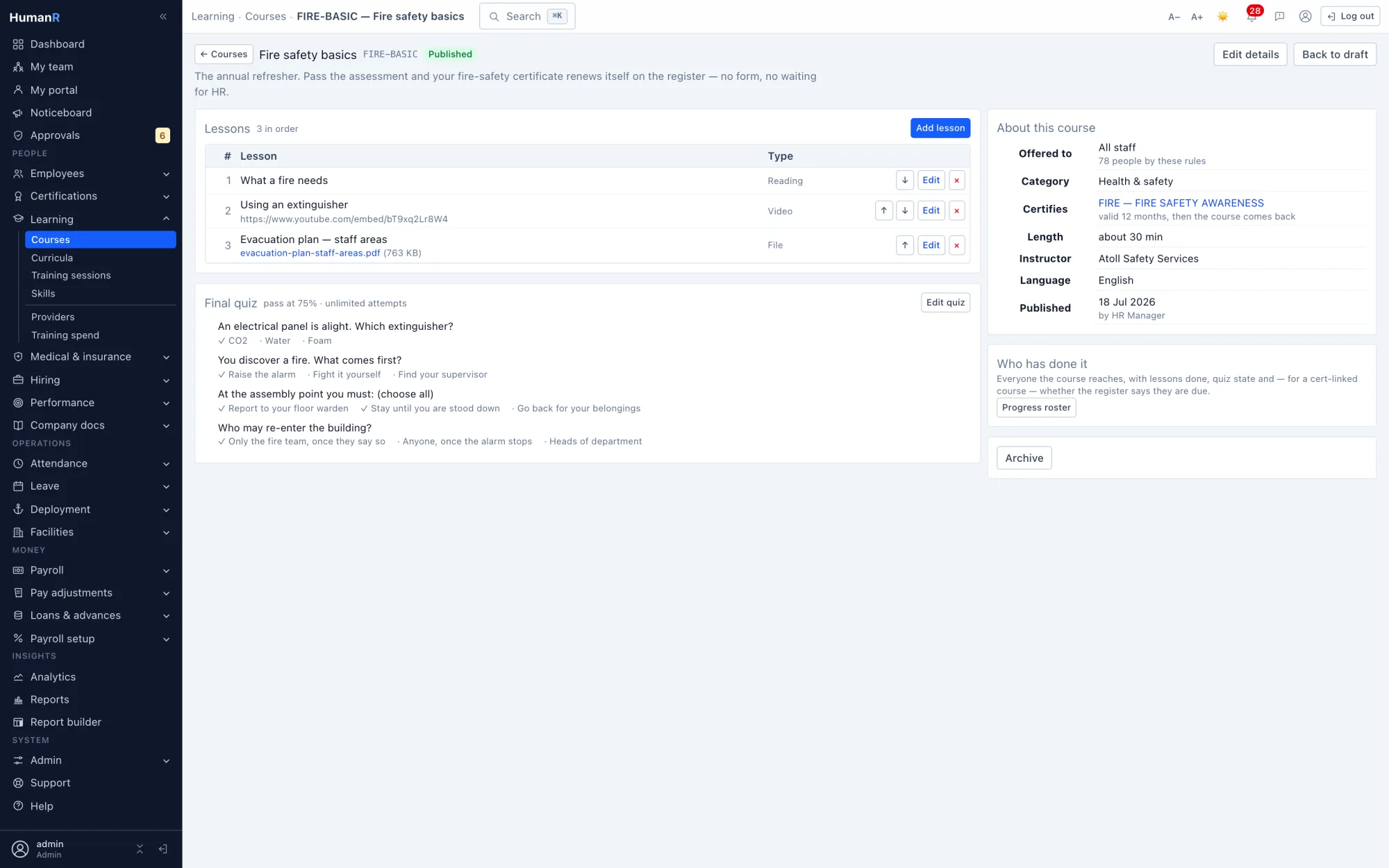
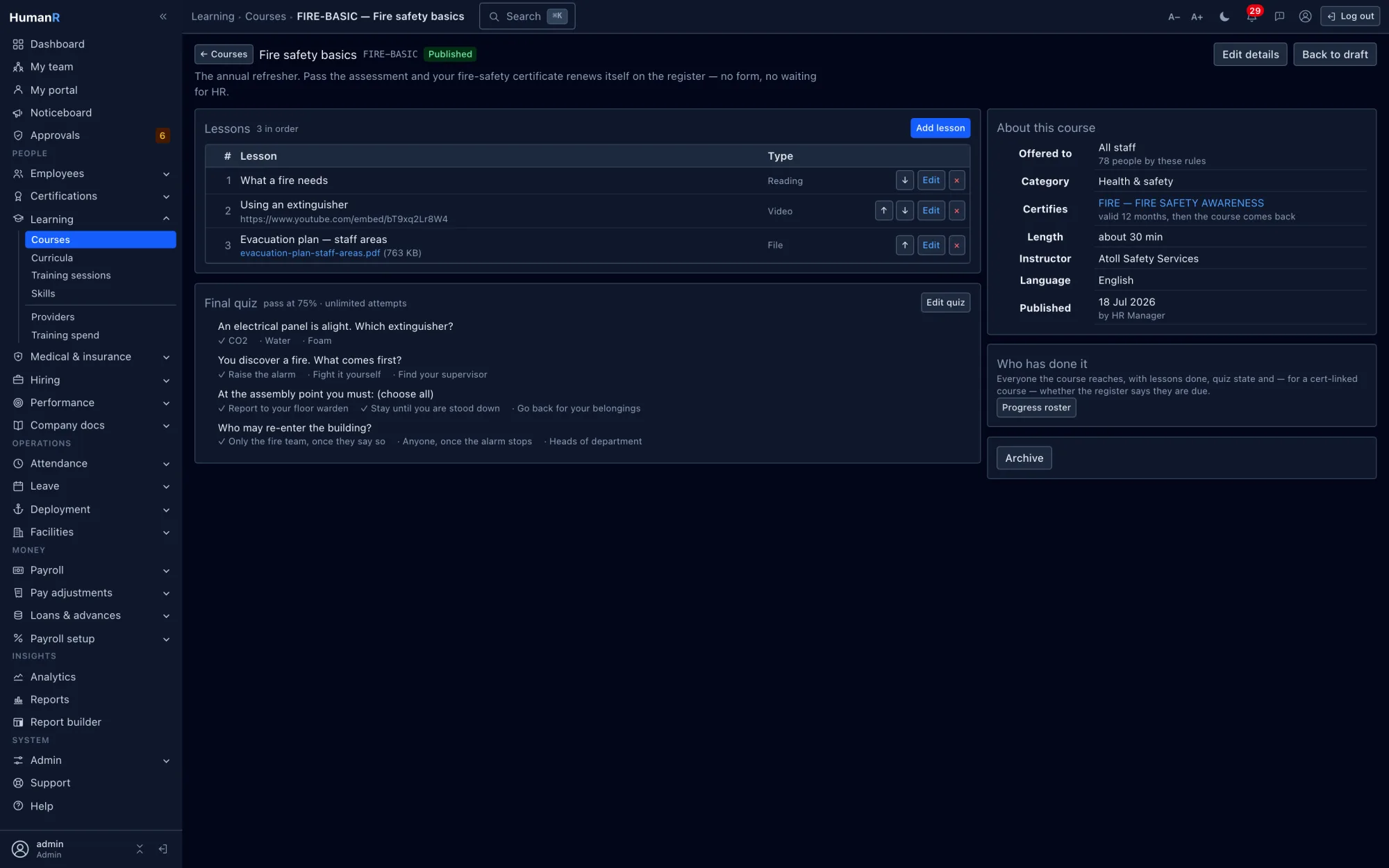
Reading, video, file and marked assignment, in an order you set. Each lesson is its own completion and therefore its own resume point, which is what lets someone do a course in the gaps of a shift rather than needing forty free minutes. Video is embedded from YouTube or Vimeo rather than hosted by us — half a roster is on island or vessel bandwidth, and a self-hosted file is the one that will not play.
A quiz you can type, and a paper nobody can pass round
Questions are typed rather than dragged, so a paper can be pasted out of a Word file and read at a glance. Set a pass mark, attempts, a time limit, shuffling, and how many questions to draw from a pool — draw ten from forty and two people sitting side by side get different papers. Every sitting is graded on the server and never re-graded, keeping the paper exactly as it was dealt, so editing the quiz next year cannot rewrite what somebody passed.
Assignments a person marks
The half of training a multiple-choice paper cannot reach — record yourself doing the handover, write up the incident, photograph your knife cuts. It is the one lesson type a learner cannot tick off themselves: it counts as finished when an assessor accepts it. The marking queue shows every earlier attempt underneath the current one, and sending work back requires notes, because sending it back without saying why is how an assignment becomes a hoop.
Sessions with a roster, a mark sheet and a cost
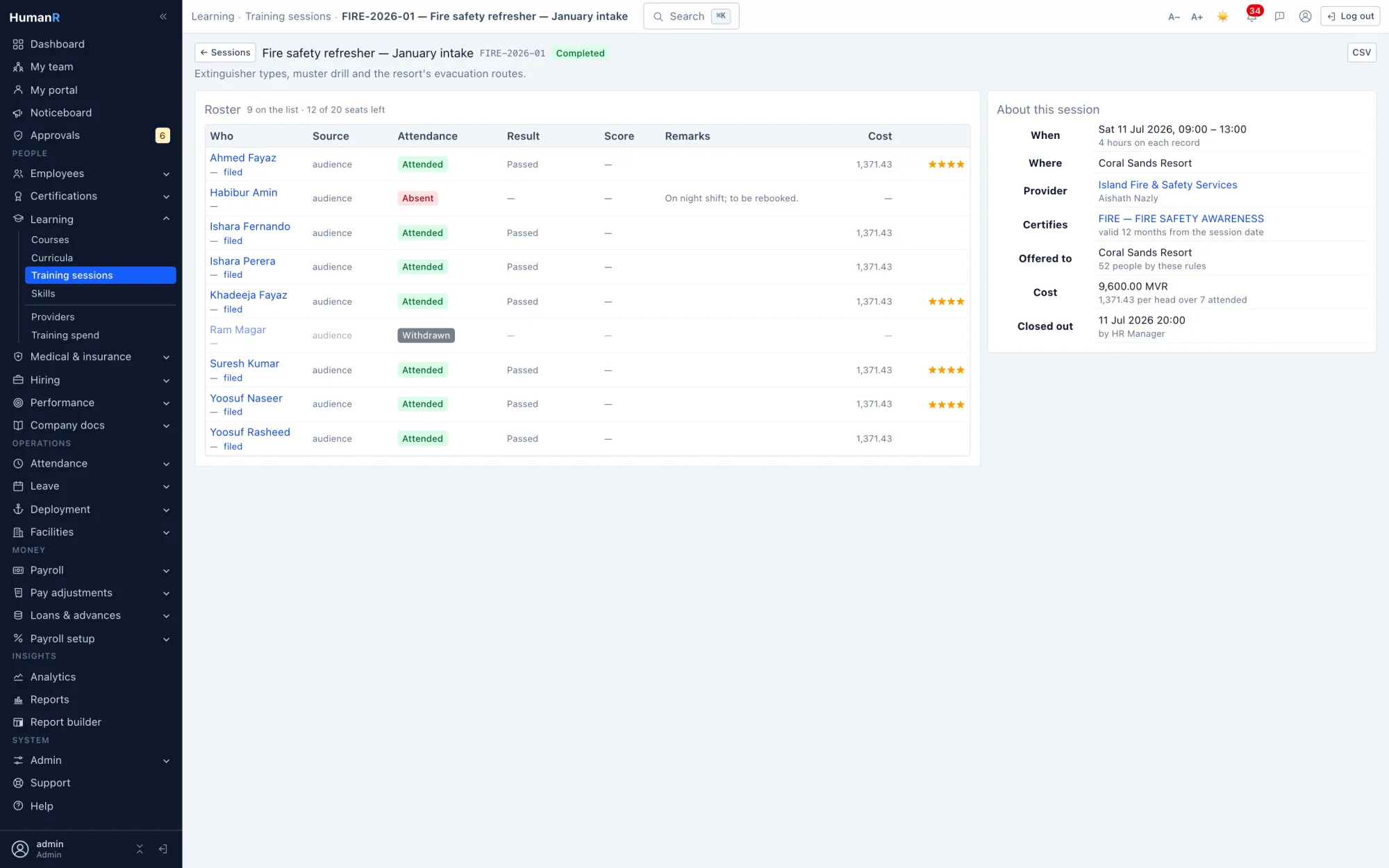
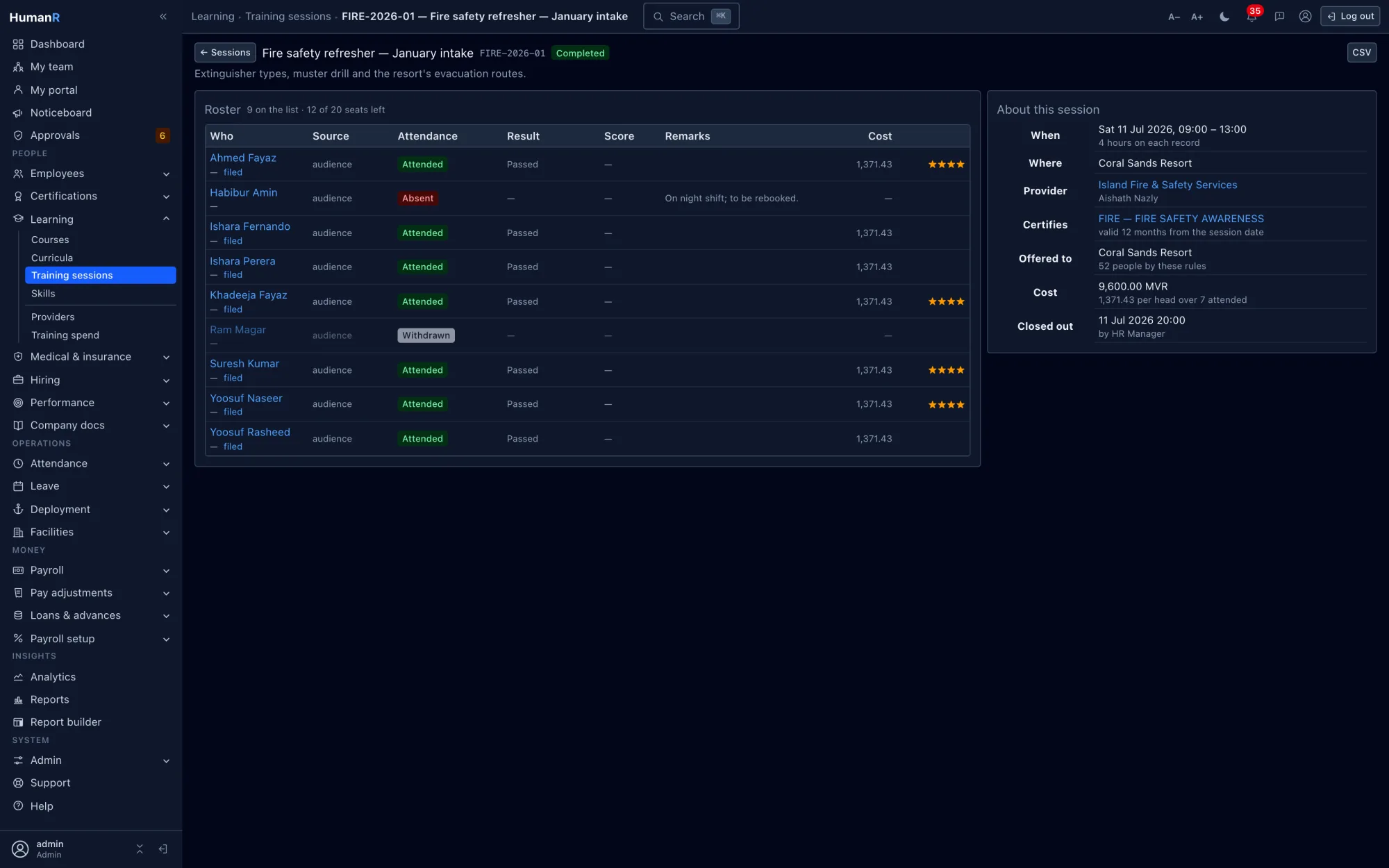
The diary of classroom and on-site events: who is booked, who turned up, who passed, what it cost and who delivered it. Marking a session's attendance is what files the credential for everybody on the sheet, so the drill on the jetty and the course on the phone reach the register by the same door.
No enrolment lists, no progress percentages to reconcile
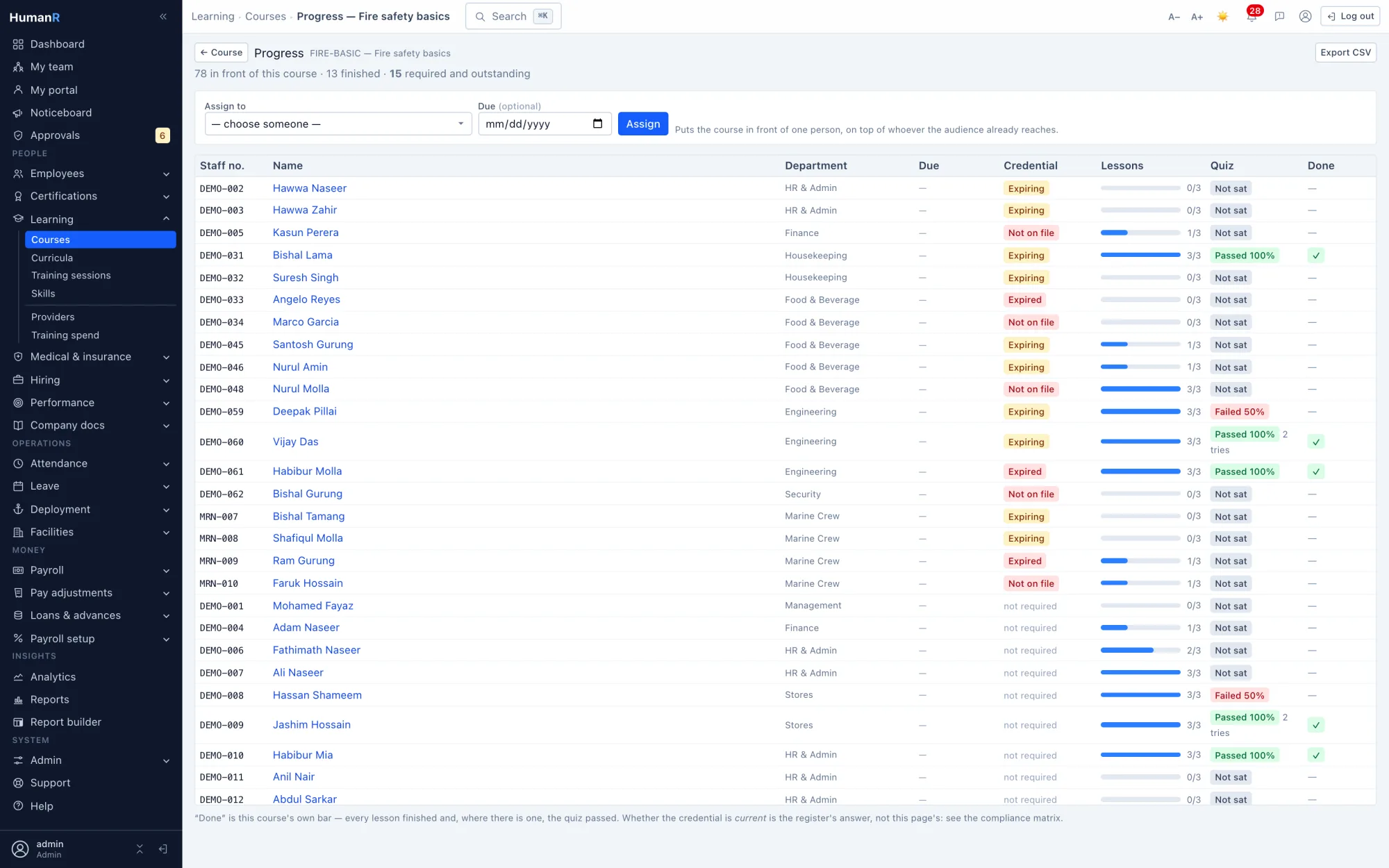
Who a course is in front of is worked out from its audience rules plus whoever the compliance matrix says is missing the credential. How far somebody has got is counted from the lessons they finished and the attempts they sat. Both are read fresh every time, so there is nothing to reconcile and nothing that can quietly drift out of step with what actually happened.
A skills matrix that shows the gap, not just the inventory
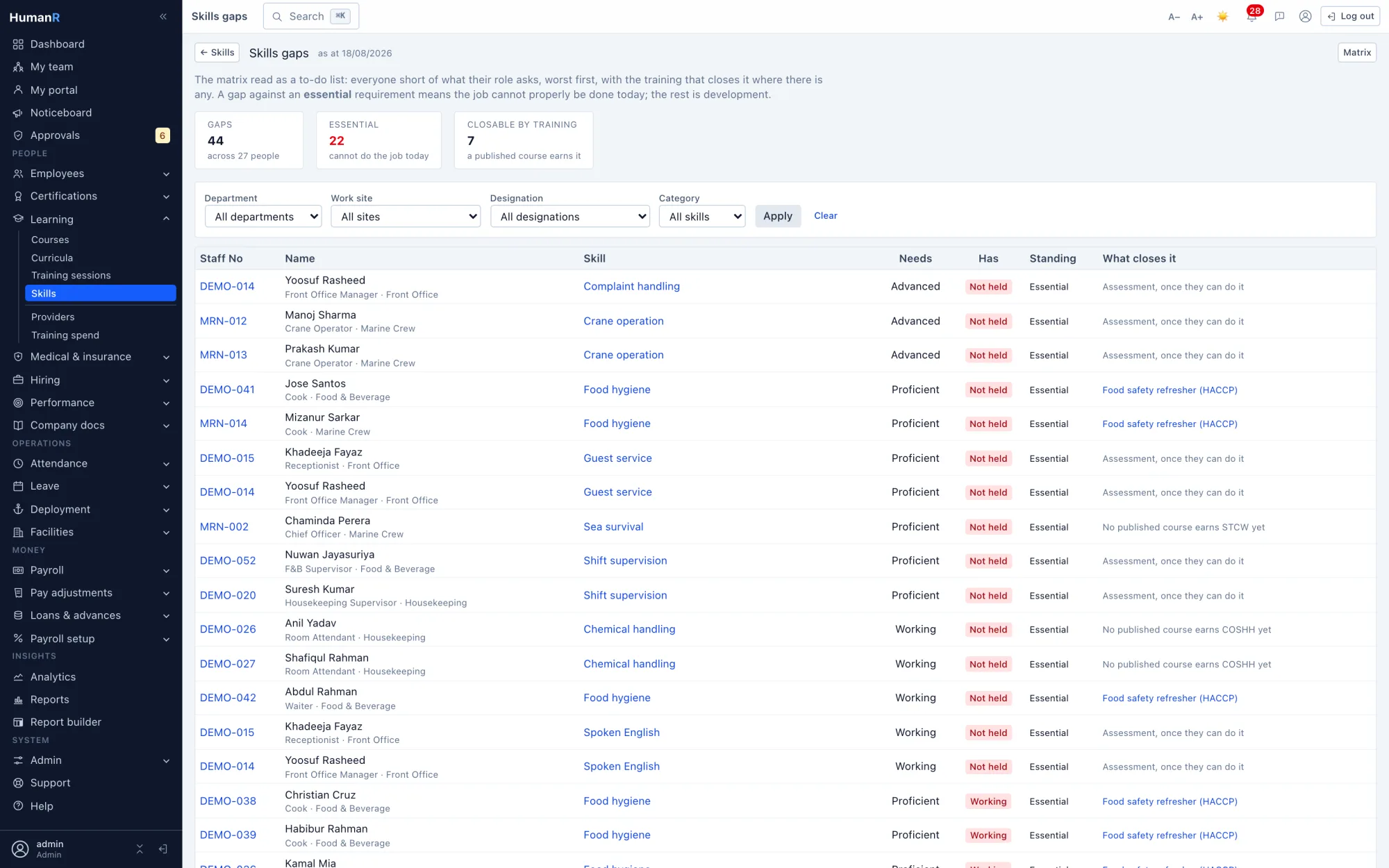
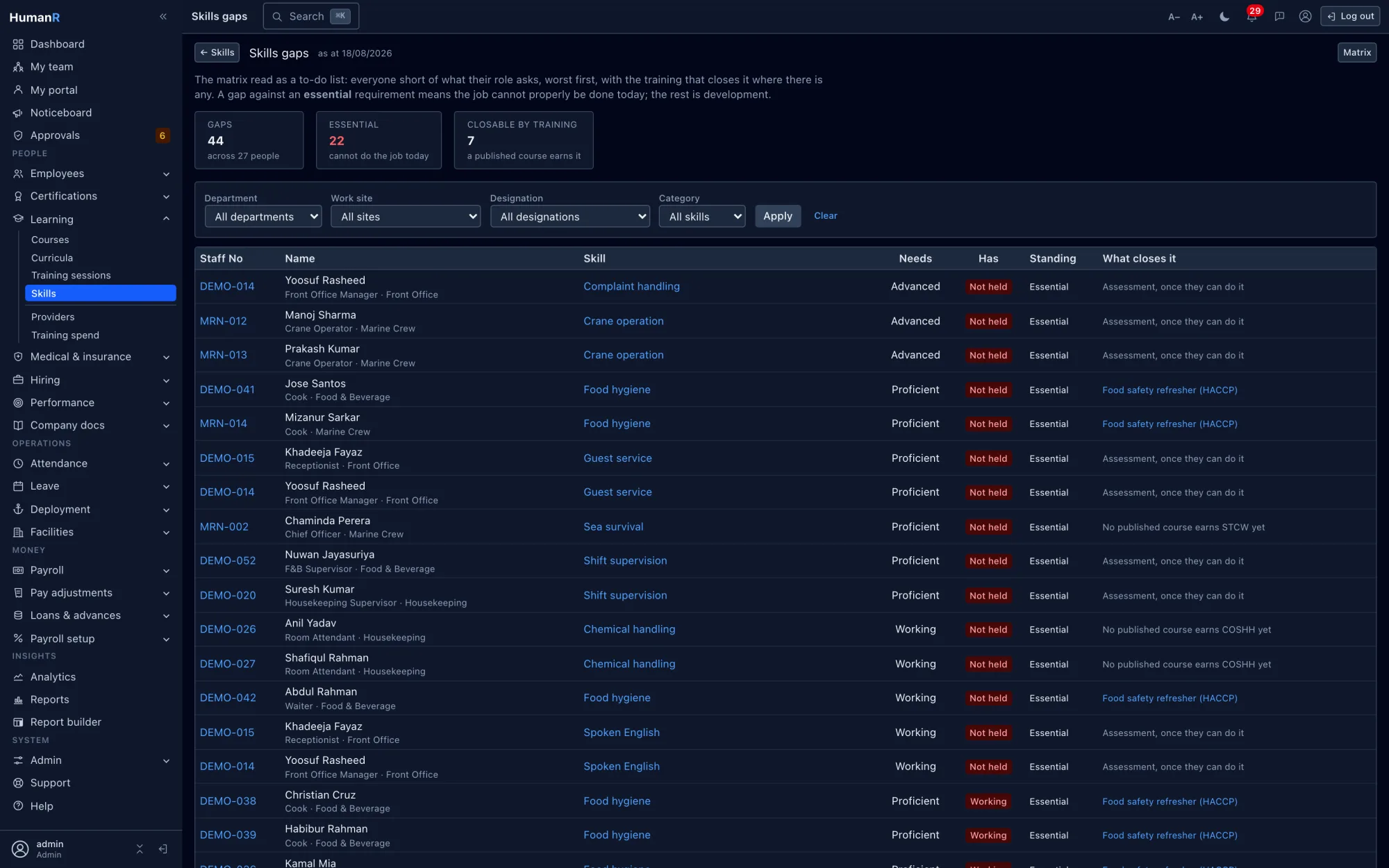
The competency catalogue, who holds what and at what level, and the gaps against what each role needs — read across people, departments and sites. It is the screen that answers 'can this shift run tonight' rather than 'how much training have we bought'.
Curricula: an ordered run that adds up to a job
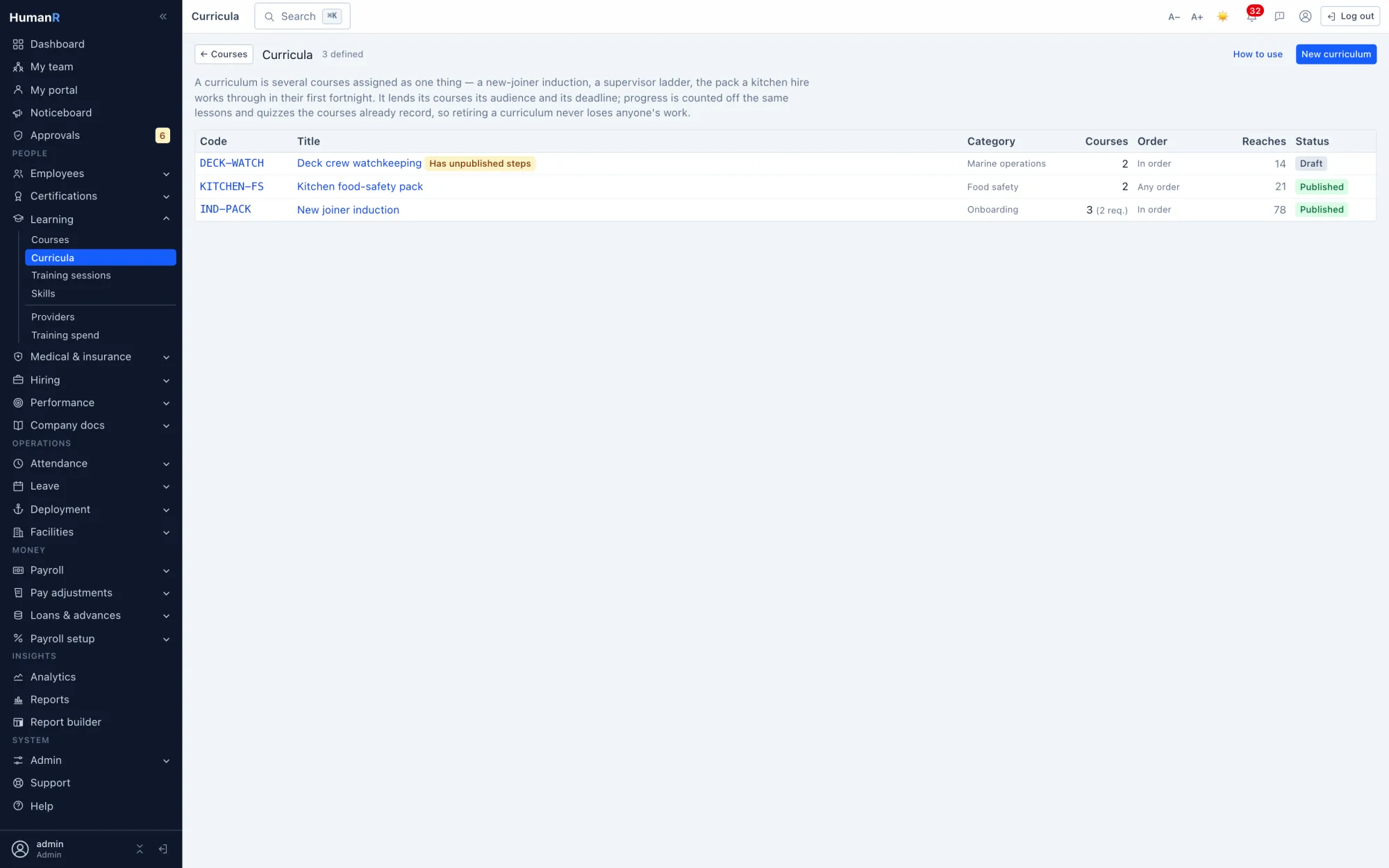
Induction, then food safety, then the equipment sign-off — a path with an order, so a new starter is given a sequence rather than a list of eleven courses and no idea which comes first. Completion of the path is counted from the courses in it, like everything else here.
Providers and spend, with a budget that warns in time
Who delivers your training, internal or bought in, and what it cost — by provider, by department, by course. Budget sits on the same screen, so the year's spend is read against what was set aside rather than discovered in September. Cost columns sit behind the same pay permission that guards salaries.
Straight from the product
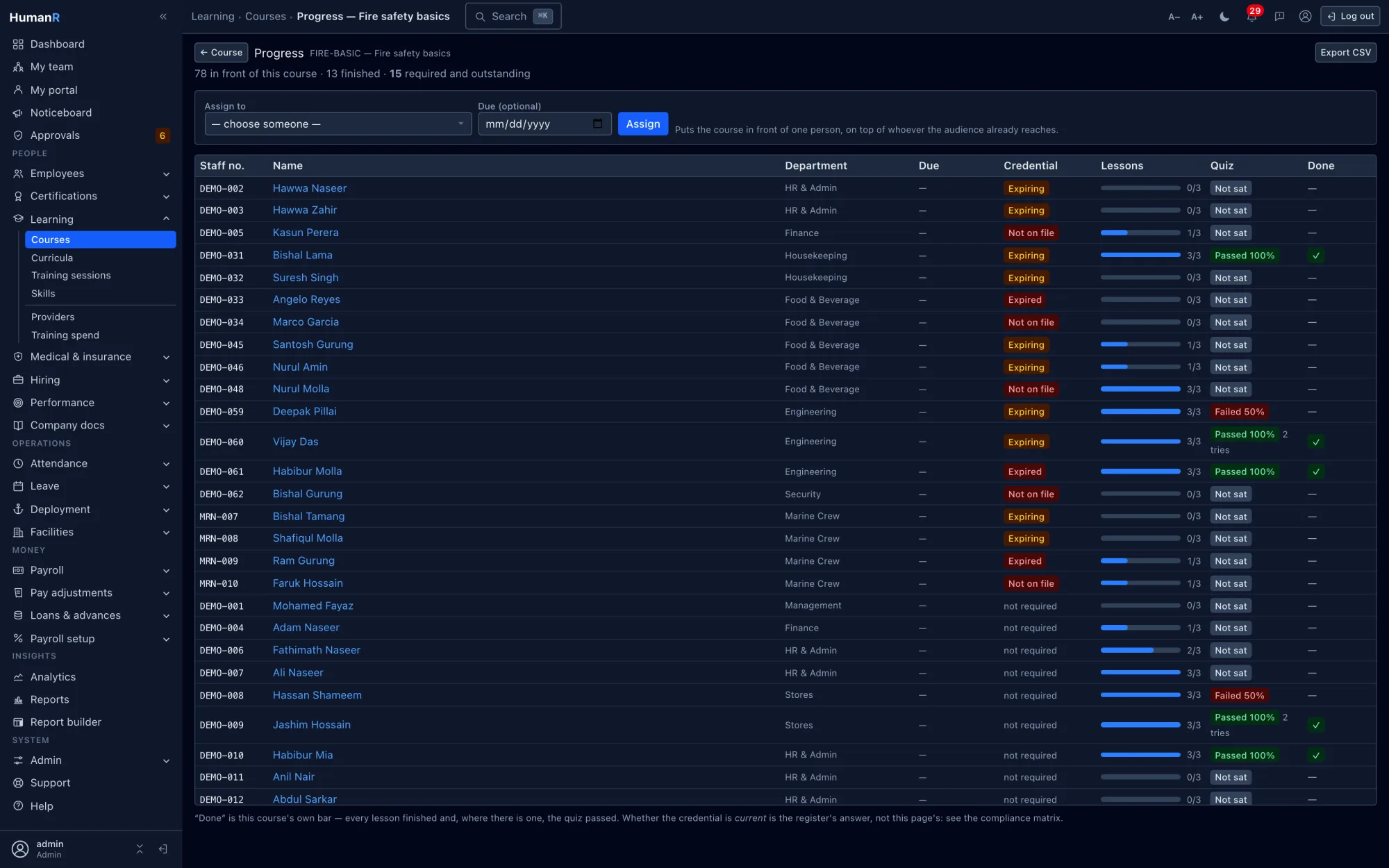
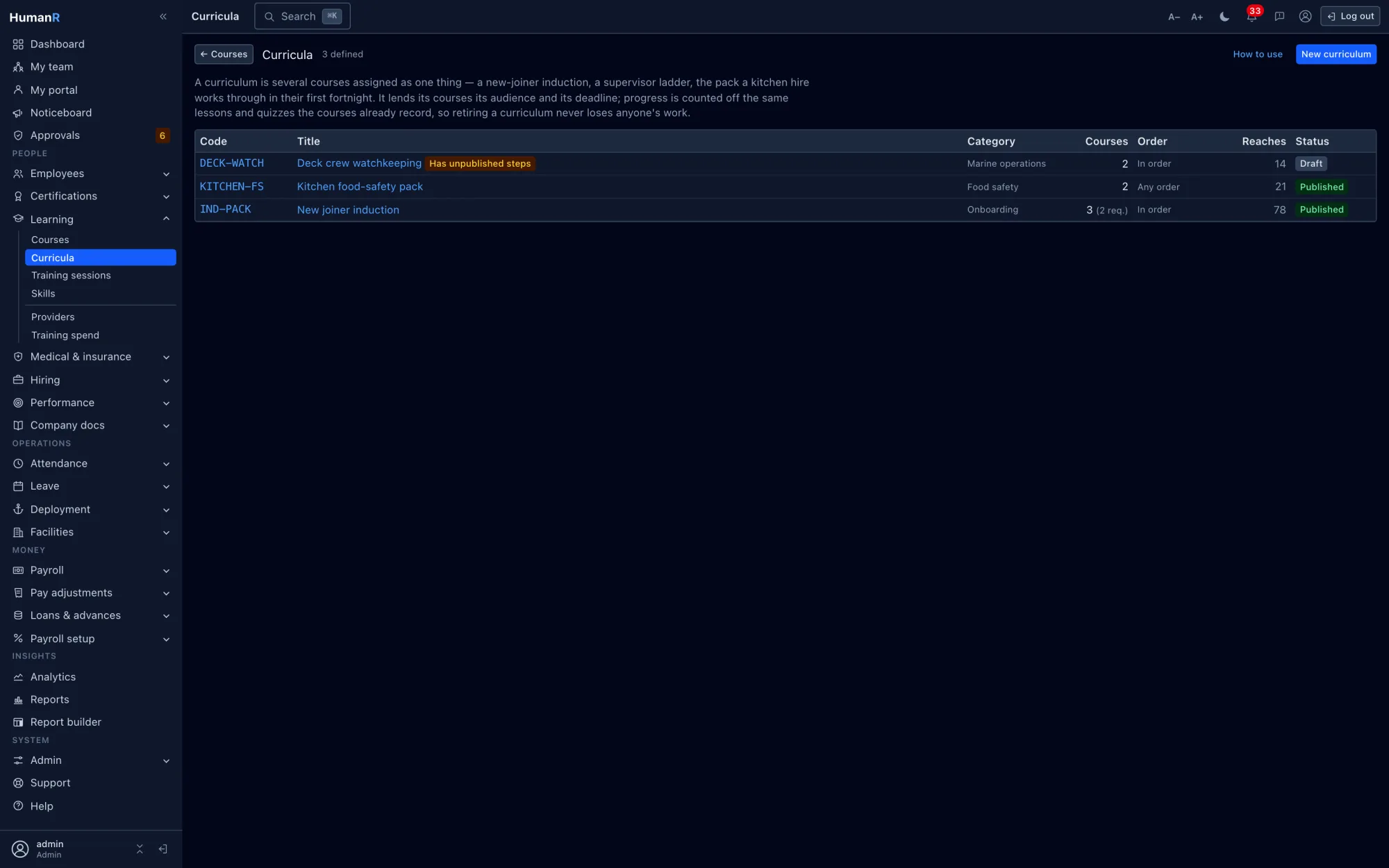
Real screens from the demo company — the same system your login opens.
Works best with
Certifications & Training
What your people hold, what their role requires, and the gap between the two
Explore →Performance & Goals
A rating a manager can defend, because the record is already on the form
Explore →Reports & Analytics
The questions HR gets asked daily — answered live, not compiled weekly
Explore →Questions
Is this a replacement for our LMS?
It can be, and it is deliberately fine if it is not. The design point is that the register accepts completions from any source — a course taken here, a session marked here, a certificate typed in by HR, or an external platform posting through the API — and treats all four identically from that moment on. So you can run your existing LMS for the content it is good at and still have one compliance grid that knows about it.
What happens to attempts if we edit a course later?
Nothing. Every attempt keeps the paper exactly as it was presented — the questions drawn, the order they were dealt in, the pass mark and the time allowed — beside the answers given. Editing the quiz next year changes what future learners sit and touches no existing result. Failed attempts stay on file too: 'failed twice, passed the third time' is precisely what a training auditor asks to see.
Can a course exist that does not certify anything?
Yes, and plenty should. The certification a course teaches is a single optional field: set it and finishing files that credential, leave it blank and the course is knowledge-sharing that files nothing — which is exactly right for a 'how we do handover' explainer. Not everything worth teaching is something worth putting on a compliance grid.
How does this relate to the certification register?
It is the same register. Certifications tracks what people hold and what their roles require; Learning is how they come to hold it. A completion here writes a normal register row with its expiry, its provider and its contact hours, which then renews, chains and appears on the compliance matrix like any other credential — including ones you recorded long before this module existed.
Jionee mwenyewe kwa data inayofanana na yako
Omba demo na tutakutumia kwa barua pepe akaunti yako binafsi ya kuingia katika kampuni ya mfano iliyojaa data — chunguza skrini halisi zenye data ya kweli ndani ya dakika chache.
Hakuna kadi ya mkopo. Hakuna simu ya mauzo. Akaunti halisi ya kuingia, inayotumwa kwa barua pepe.