Hiring & Applicant Tracking
Every candidate on one board, from the advert to the first day
A full applicant tracking system: openings that get approved before they go public, a careers portal candidates apply through, and one board carrying every applicant through screening, interviews, scorecards and the offer. When someone accepts, they walk straight into onboarding — or, for an expat role, onto the immigration pipeline — without anyone retyping a name.
See it live — demo in minutes →Sound familiar?
Candidates live in an email thread, and only the person who owns the thread knows where anyone stands
Interview feedback exists in somebody's memory until the day a decision has to be defended
An offer lapses because nobody was watching the date on it
Six months of CVs sitting in a shared drive with no retention policy and no way to honour a deletion request
Capabilities
What you get
10 capabilities
Openings approved before they go public
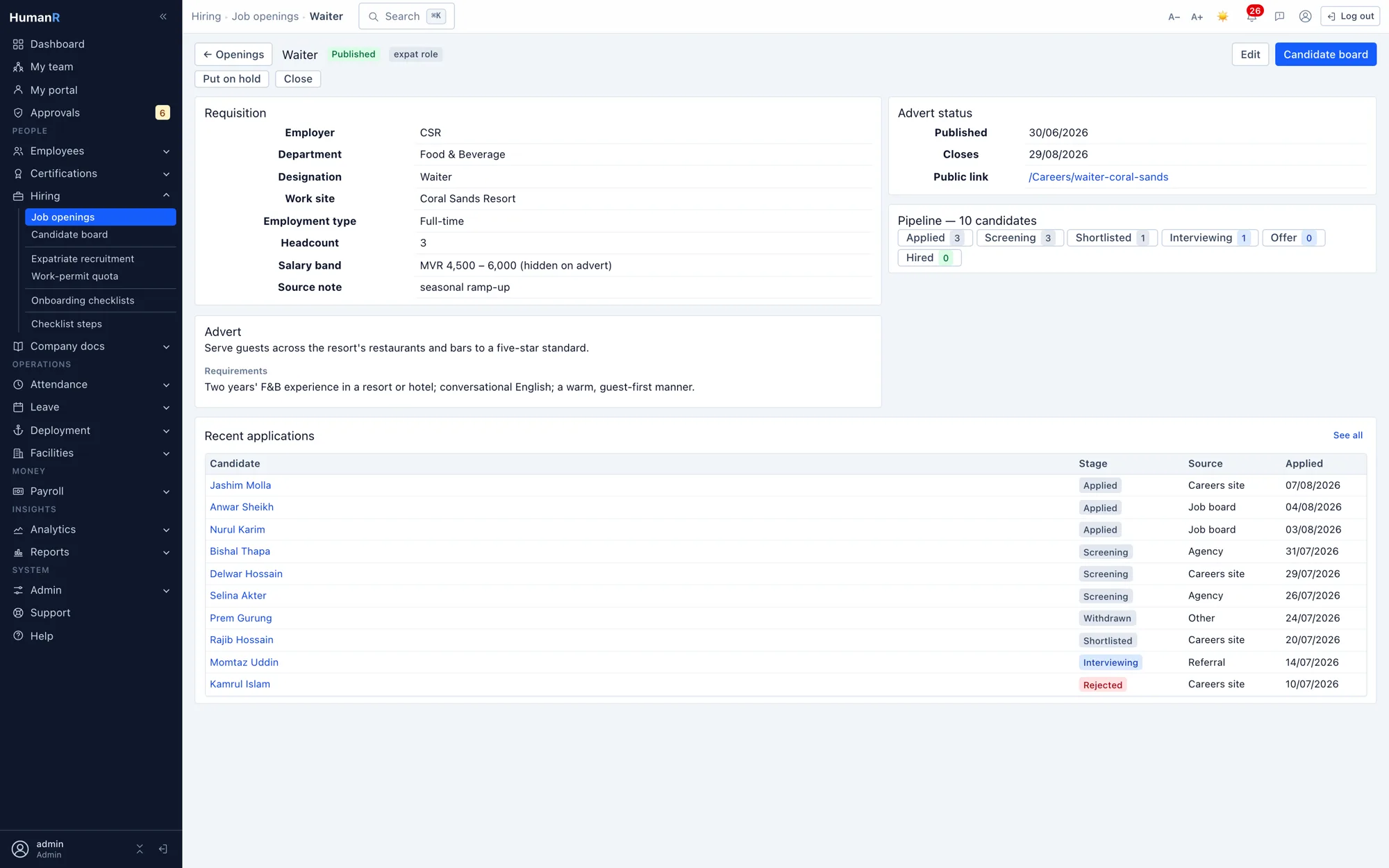
An opening carries both the internal requisition and the public advert, and travels draft → approval → published. Publishing is what mints its public link, so nothing reaches the careers page that a budget holder has not signed off.
A careers portal candidates apply through
A no-login public page listing your live openings, each advert marked up for Google for Jobs, with a CV upload that lands the applicant straight on the board. Protected by a honeypot, a Turnstile check, a per-IP rate limit and the same file rules as every other upload.
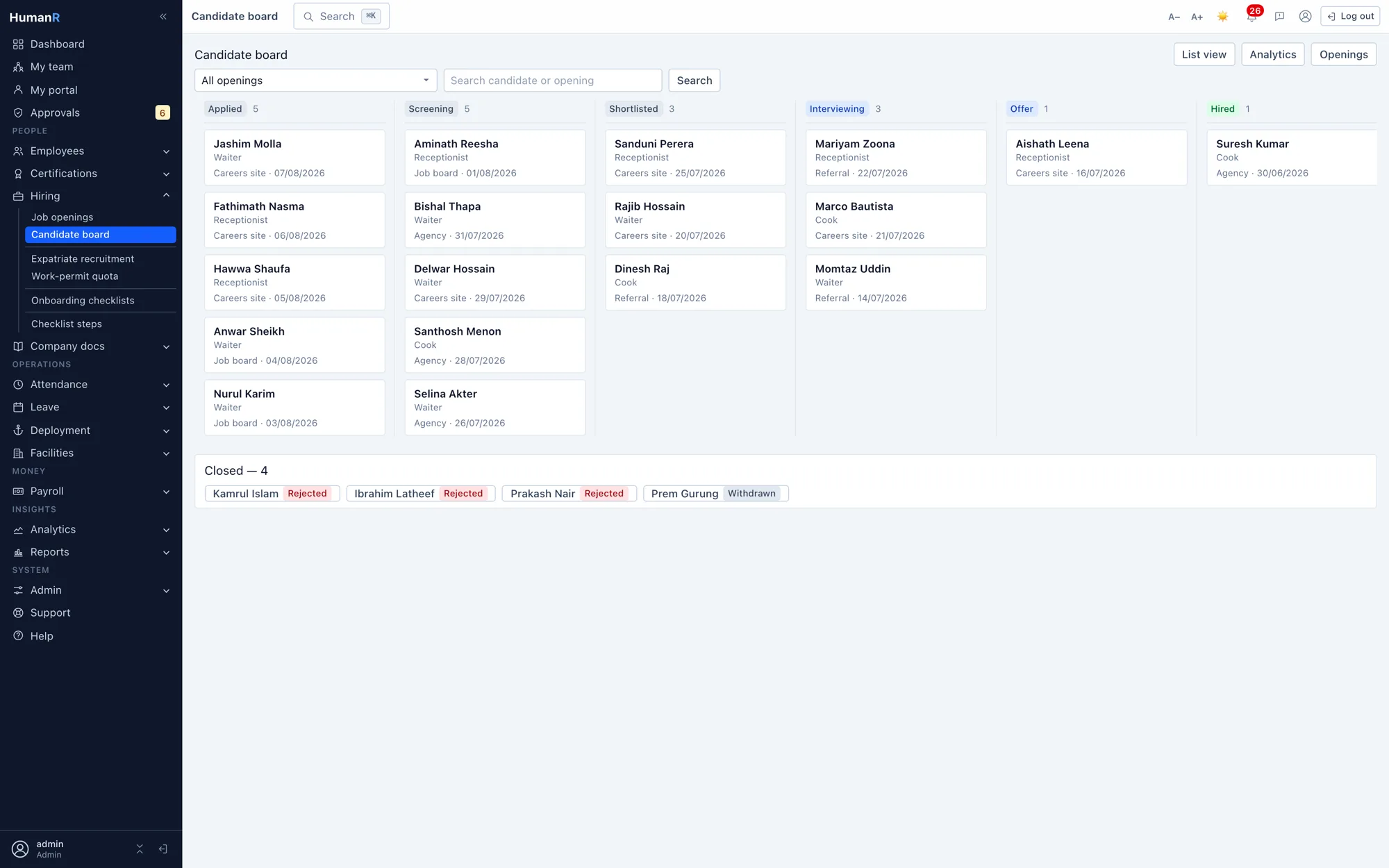
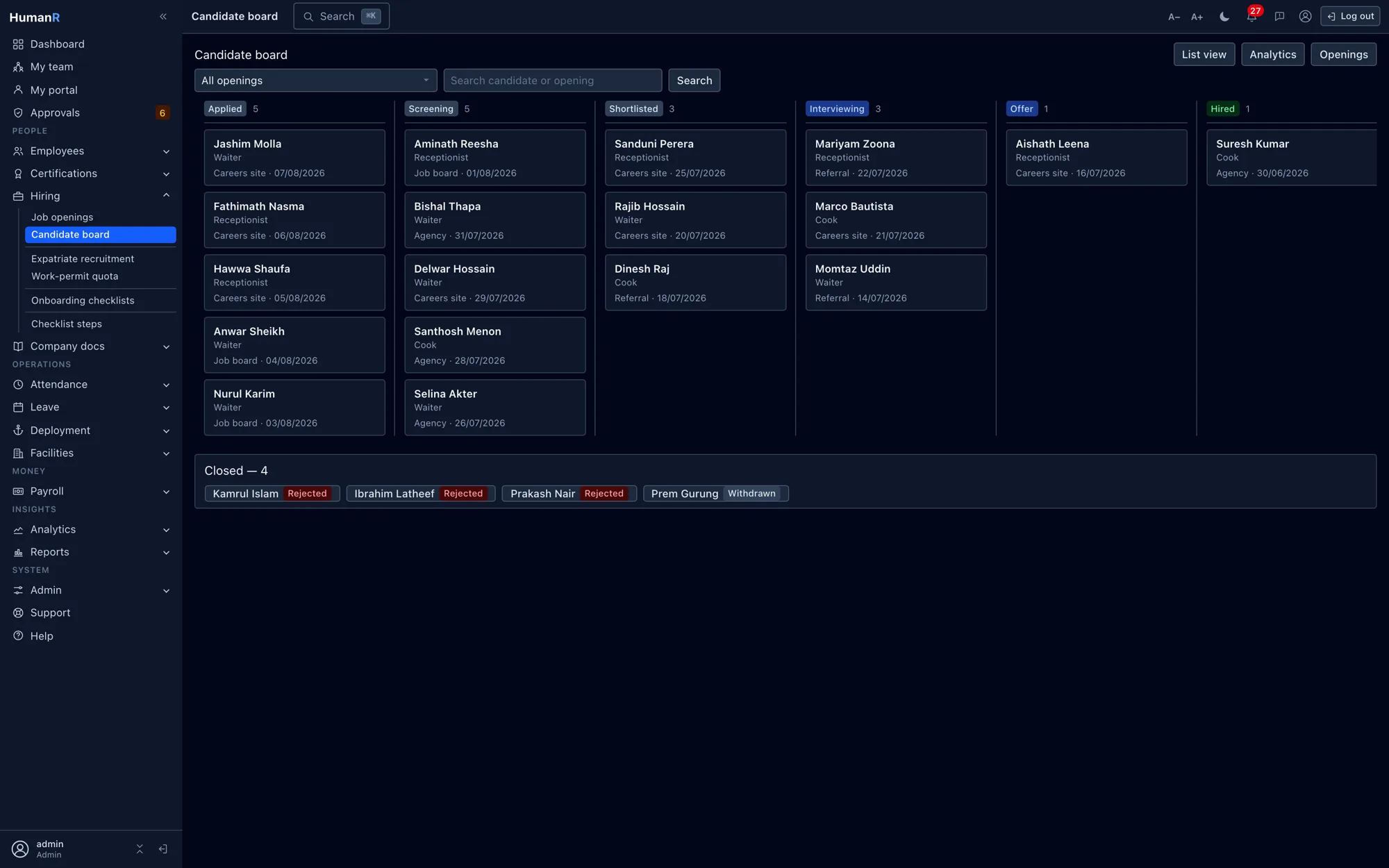
One board, every candidate, every stage
Applied, screening, shortlisted, interviewing, offer, hired — a kanban across the whole pipeline. Every move writes a stage event, so how long someone sat at each rung is a fact rather than a recollection.
Interviews with scorecards, not impressions
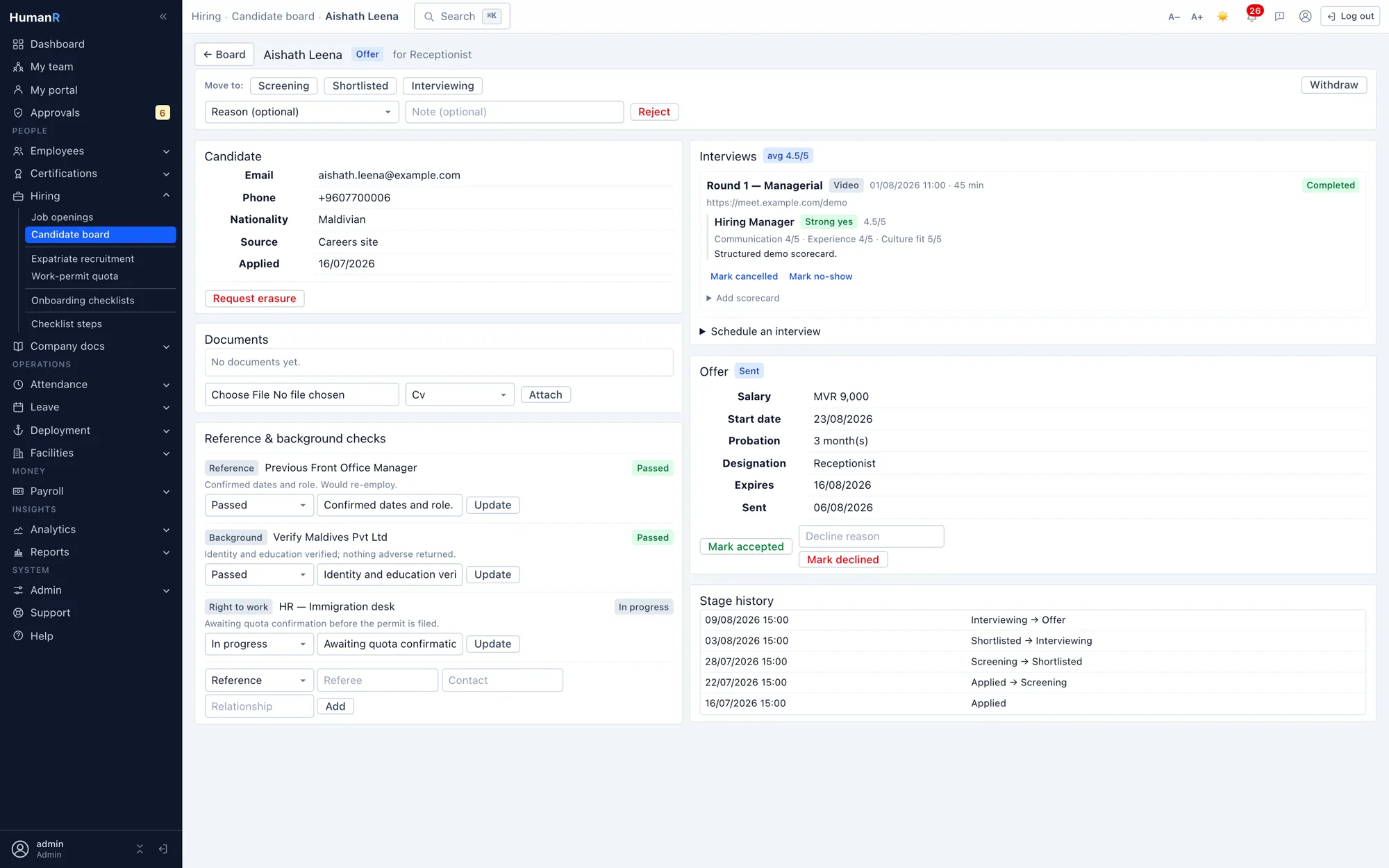
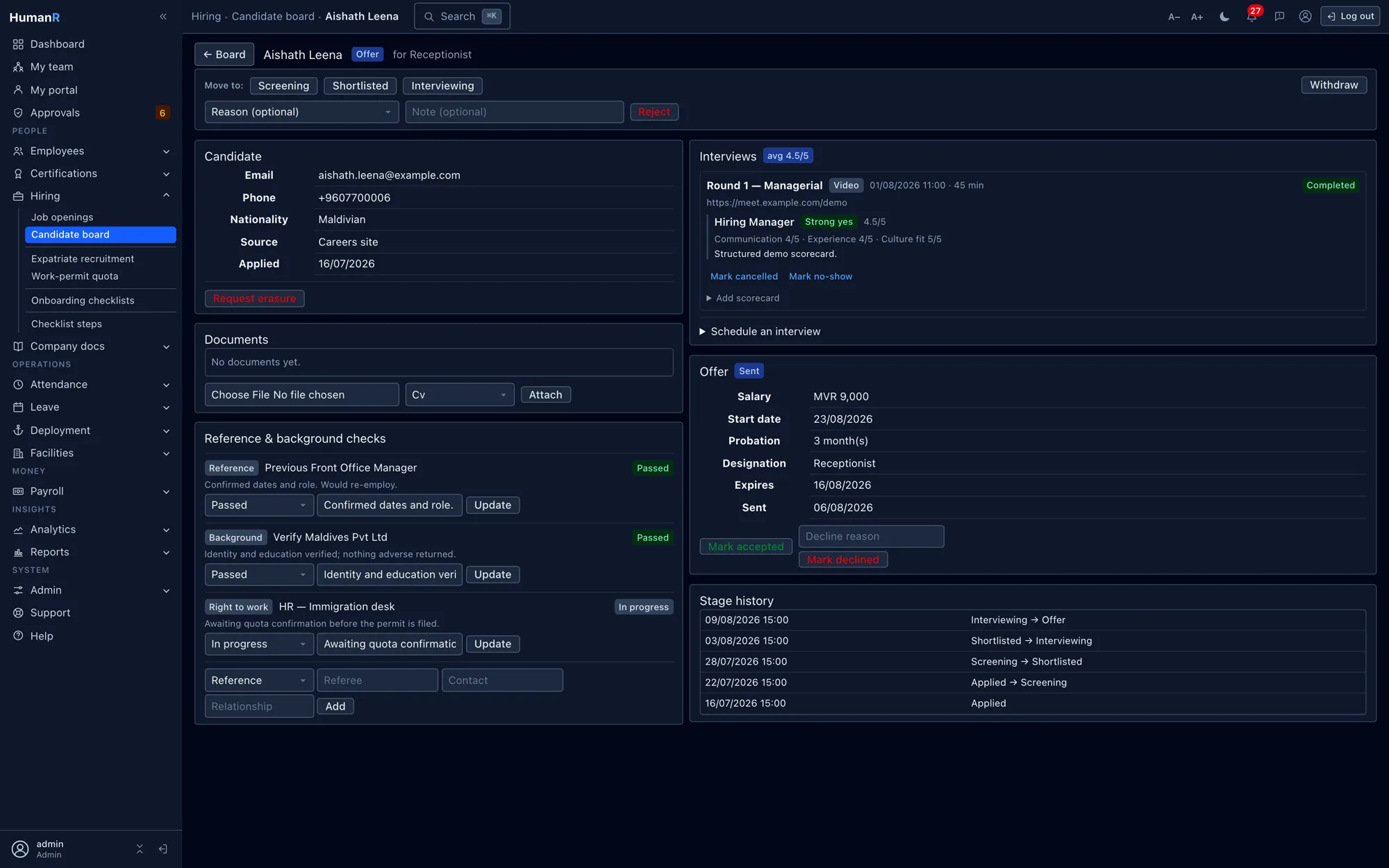
Schedule an interview, send the invite with a calendar file attached, and capture each interviewer's ratings and recommendation against it. The panel's verdicts sit on the candidate's page next to the CV.
Offers that chase themselves
Build the offer, route it for approval, send it, record the answer. An offer with an expiry date is watched by the nightly pass and flagged when it lapses, instead of quietly going stale.
Reference checks recorded, not remembered
Each referee, what was asked, what came back and whether it is still outstanding — attached to the candidate rather than living in the recruiter's inbox.
Rejections with a reason from a fixed list
Rejecting a candidate takes a reason from a maintained catalogue, so 'why do we lose people at screening' is a report and not a guess. Candidates can be reopened if a role comes back.
Candidate data that expires on schedule
A retention window you set, enforced by a purge that runs four times a day: identifying fields stripped, CV files deleted, the candidate anonymised in place. A candidate can trigger it themselves from a private link in their confirmation email — no account, no login. Stage events survive, so erasing a person never breaks your funnel numbers.
Funnel, sources and time-to-hire
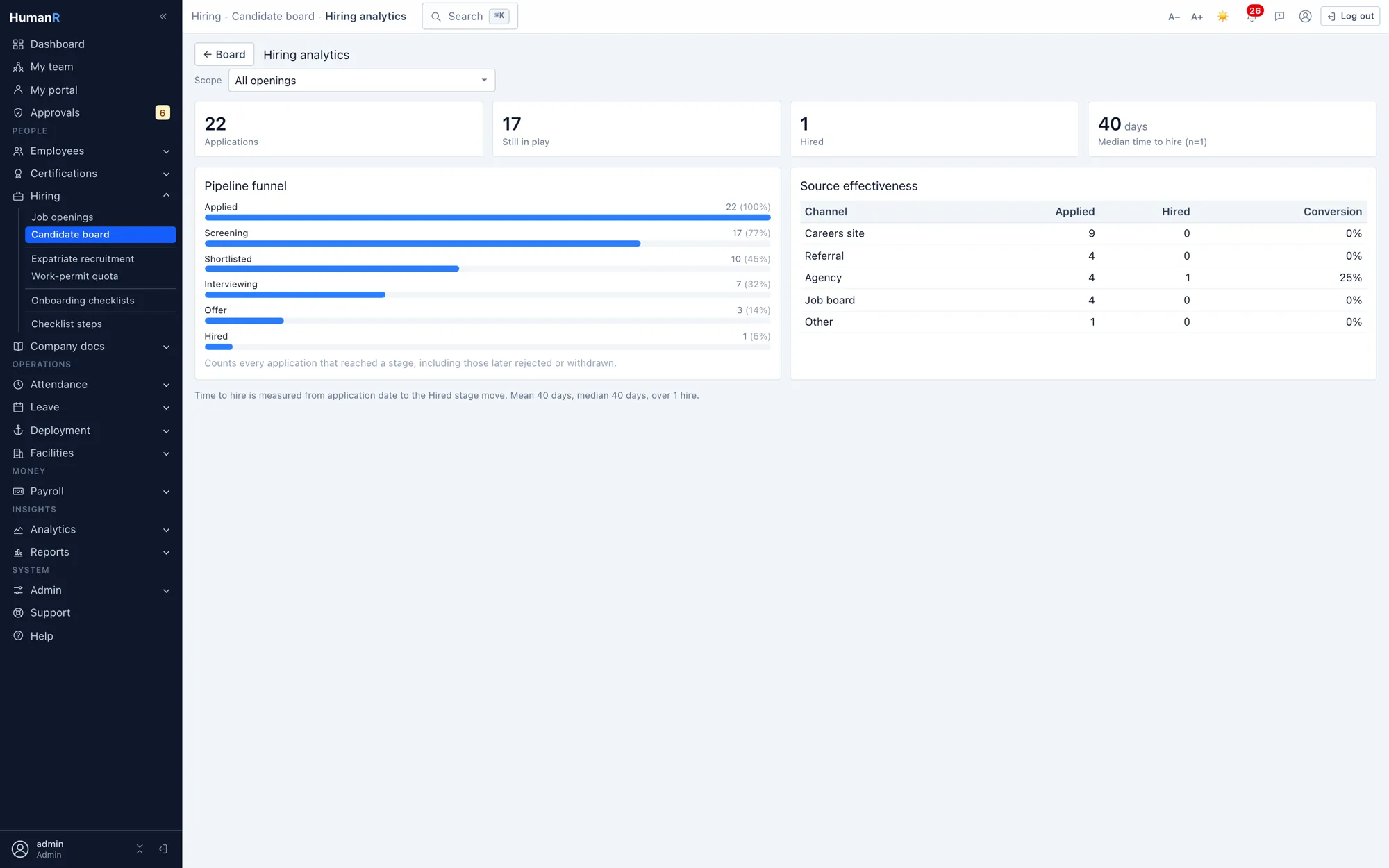
Conversion at every rung, applications and hires broken down by channel, and average and median days from application to hire — computed from the stage trail, so the numbers hold even after candidates are purged.
Hiring hands off to the rest of the system
Mark a candidate hired and the system takes the right branch: a local hire becomes an employee record with an onboarding checklist opened against it, and an expat role becomes a recruitment request already at offer-signed on the immigration pipeline.
Straight from the product
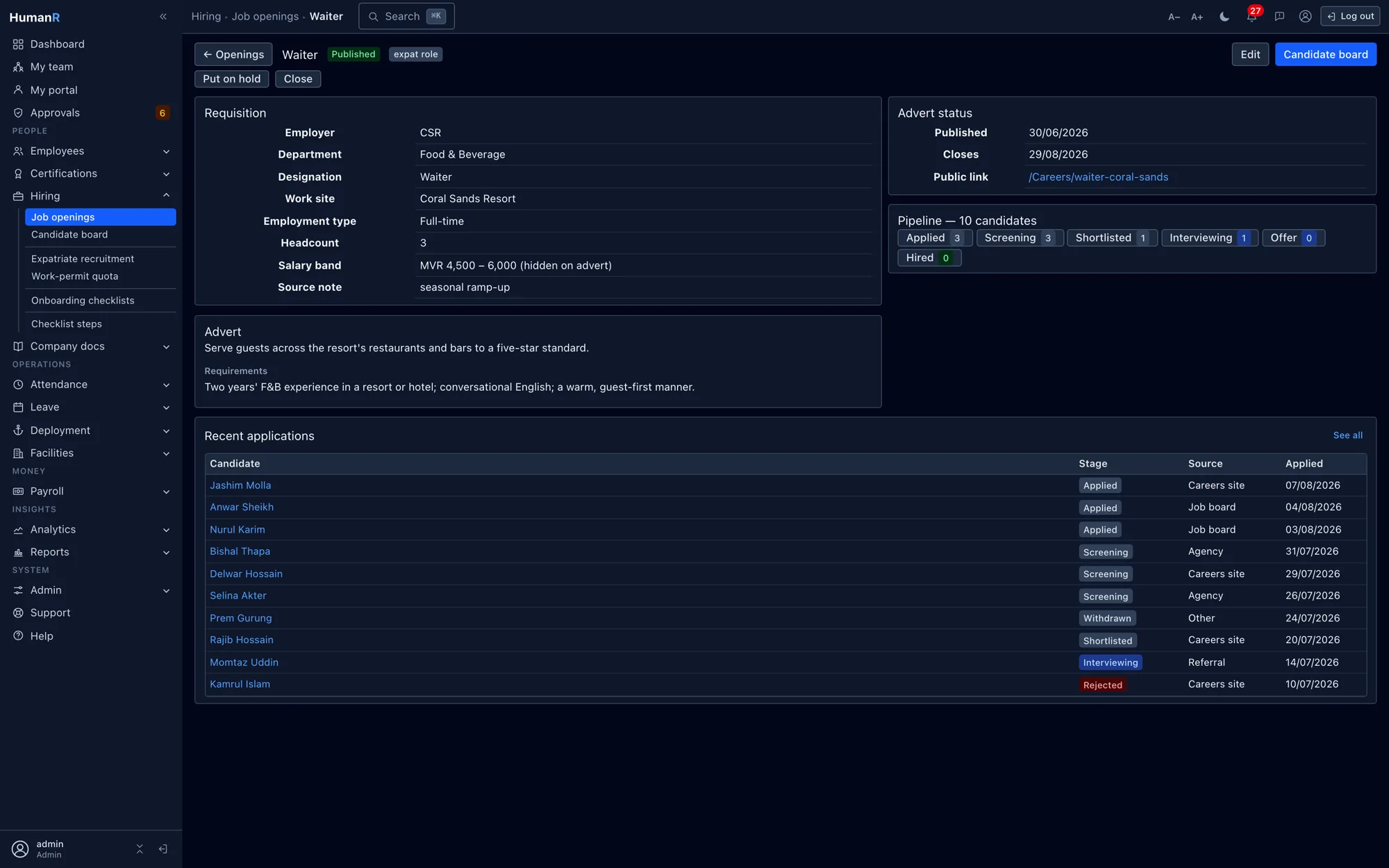
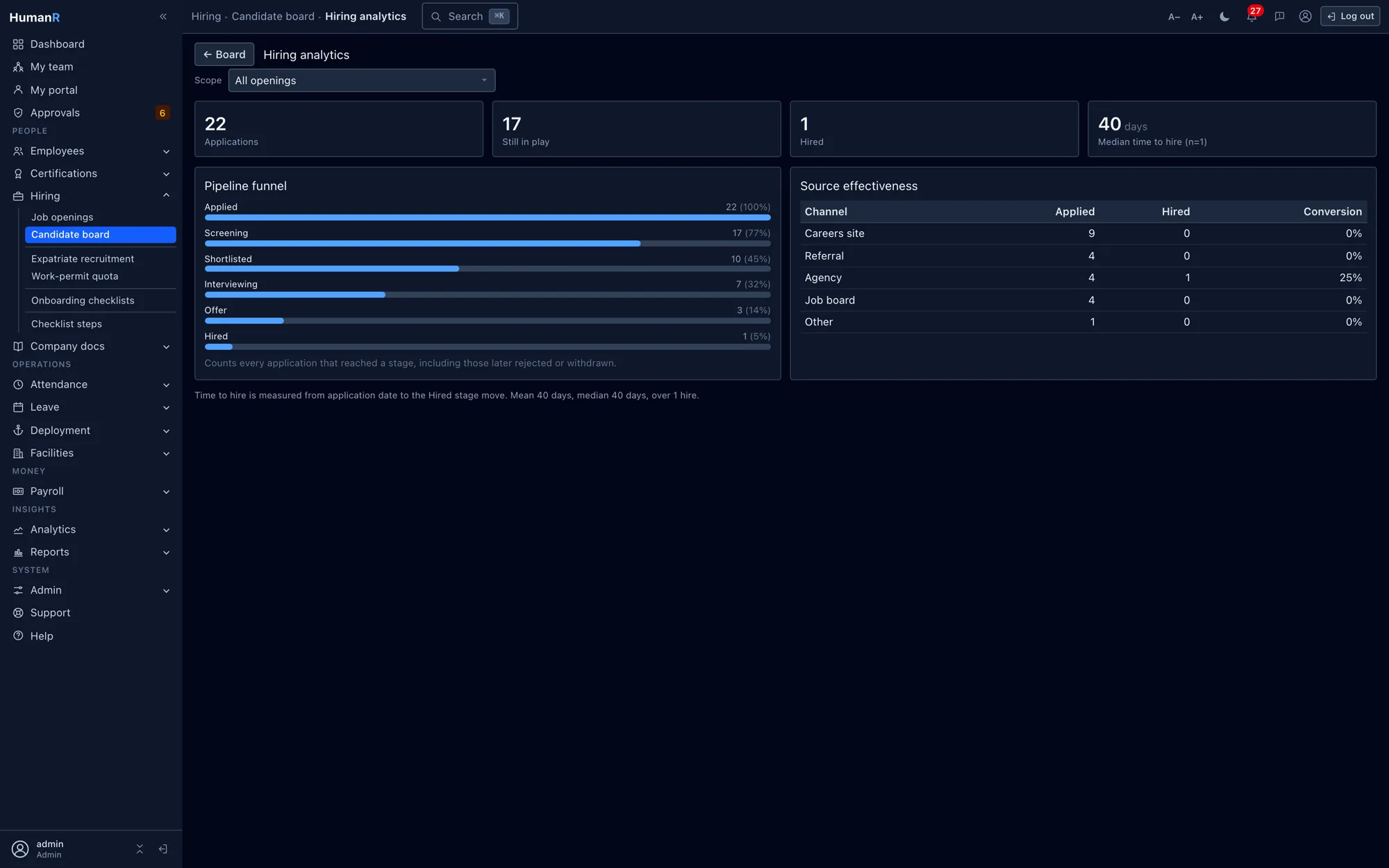
Real screens from the demo company — the same system your login opens.
Works best with
Mobilisation & Onboarding
From vacancy request to signed-off day one — no lost steps, whichever way they arrived
Explore →Letters & E-signature
Issue it on your letterhead, file it where nobody can edit it, then get it signed
Explore →Expat & Work Permit Management
Visas, permits, quota and tickets — the expat lifecycle, handled
Explore →Approvals & Workflows
Every sensitive action gets the right eyes — automatically
Explore →Questions
How is this different from the expat recruitment pipeline?
They are two routes into the same company, and both ship. The expat pipeline is agency mobilisation — you name the heads you need, an agency sources them, and the tracking is about quota, entry pass, visa and arrival date. The ATS is direct sourcing — your own advert, your own applicants, interviews and an offer you make yourself. They meet at the hire: an ATS opening flagged as an expat role creates a recruitment request at offer-signed rather than an employee, so the candidate lands on the immigration pipeline instead of bypassing it.
How long do we keep candidate data?
As long as you configure, defaulting to 180 days after the last application closes. Past that the candidate is anonymised, not deleted: identifying fields are cleared and CV files are removed from storage, while the stage history — which carries no personal data — stays so your funnel and source reporting survive. A candidate who asks to be forgotten is honoured on the next pass, within hours rather than at the next month-end. Anyone hired is exempt, because they are an employee now and their record lives under employment retention instead.
Do candidates need an account?
No. They apply from the public careers page with no login, and the confirmation email carries a private link to their own privacy console where they can see their applications, withdraw one, or request erasure. There is no candidate password to reset and no candidate account to breach.
Jionee mwenyewe kwa data inayofanana na yako
Omba demo na tutakutumia kwa barua pepe akaunti yako binafsi ya kuingia katika kampuni ya mfano iliyojaa data — chunguza skrini halisi zenye data ya kweli ndani ya dakika chache.
Hakuna kadi ya mkopo. Hakuna simu ya mauzo. Akaunti halisi ya kuingia, inayotumwa kwa barua pepe.