ސެޓްފިކެޓާއި ތަމްރީނު
މުވައްޒަފުންގެ އަތުގައި އޮތް އެއްޗާއި، މަޤާމުން ބޭނުންވާ އެއްޗާއި، ދޭތެރޭގައި އޮތް ފަރަގު
A register of every credential your operation is inspected on — food safety, fire warden, sea survival, lifeguard, working at height — matched against rules saying who is required to hold what. The compliance grid turns a filing cabinet of certificates into one answer: who is covered, who lapses next month, and who never had it.
See it live — demo in minutes →Sound familiar?
Certificates live in a filing cabinet, a shared drive and three people's inboxes
An inspector asks which chefs are HACCP-current and the answer takes a morning
A lifeguard's ticket lapsed in March and it surfaced in October
Renewals are discovered after they expire, when the course is already fully booked
Capabilities
What you get
9 capabilities
A catalogue of what you are actually inspected on
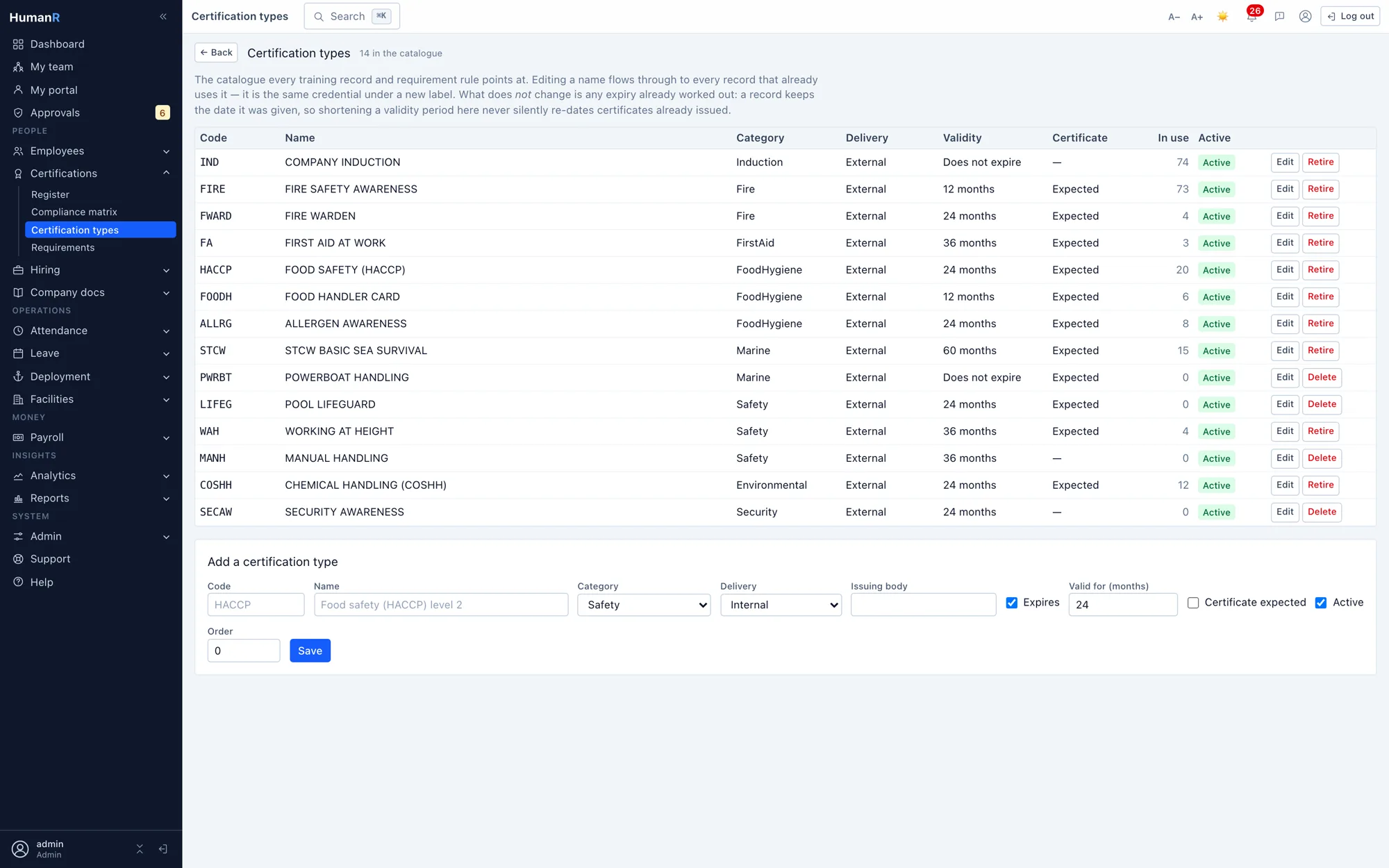
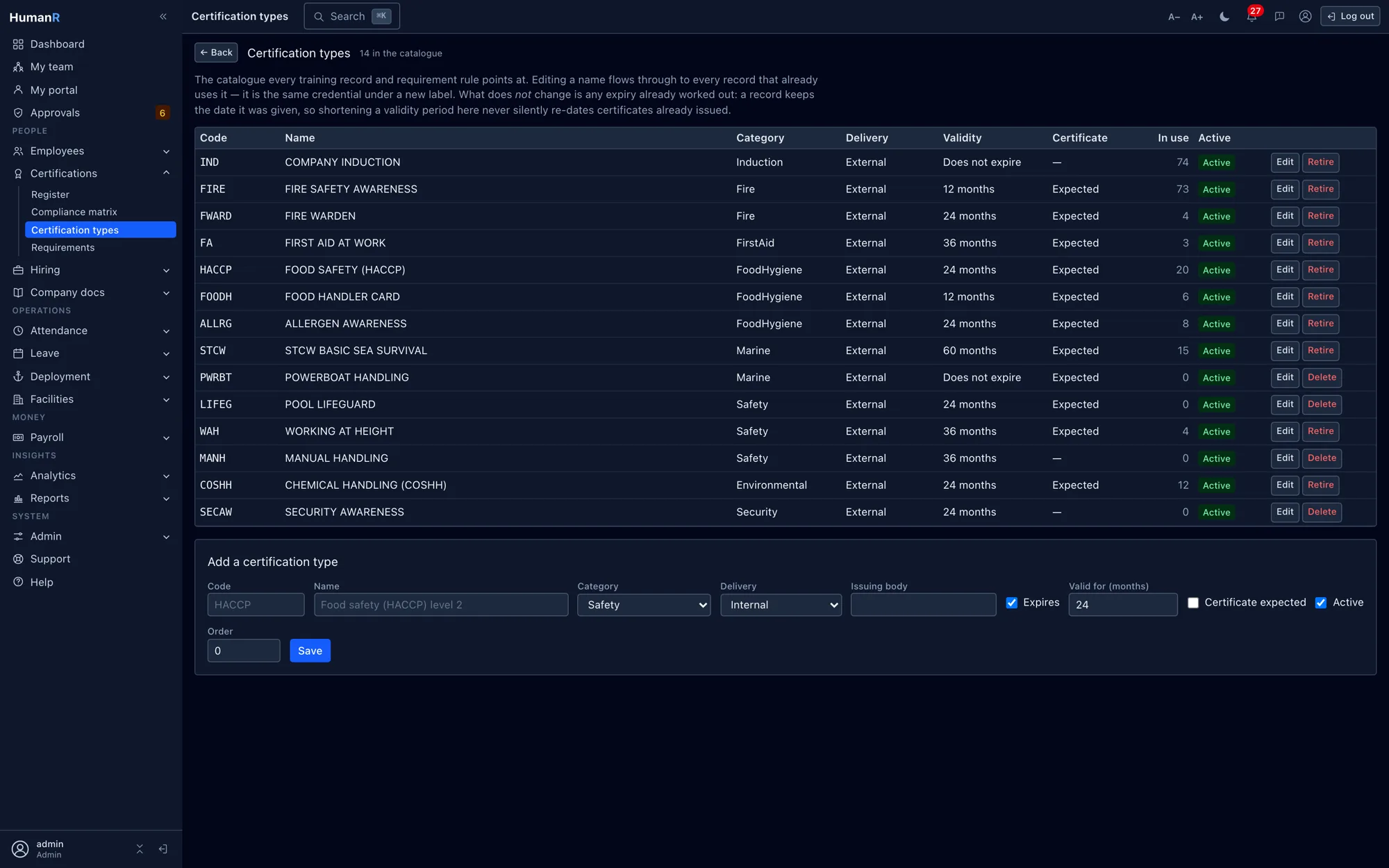
Ships with the credentials resorts, liveaboards and marine contractors are held to — company induction, fire safety and fire warden, first aid at work, HACCP, food handler card, allergen awareness, STCW basic sea survival, powerboat handling, pool lifeguard, working at height, manual handling, COSHH and security awareness. Each carries its own renewal cycle, and you edit the list rather than asking us to.
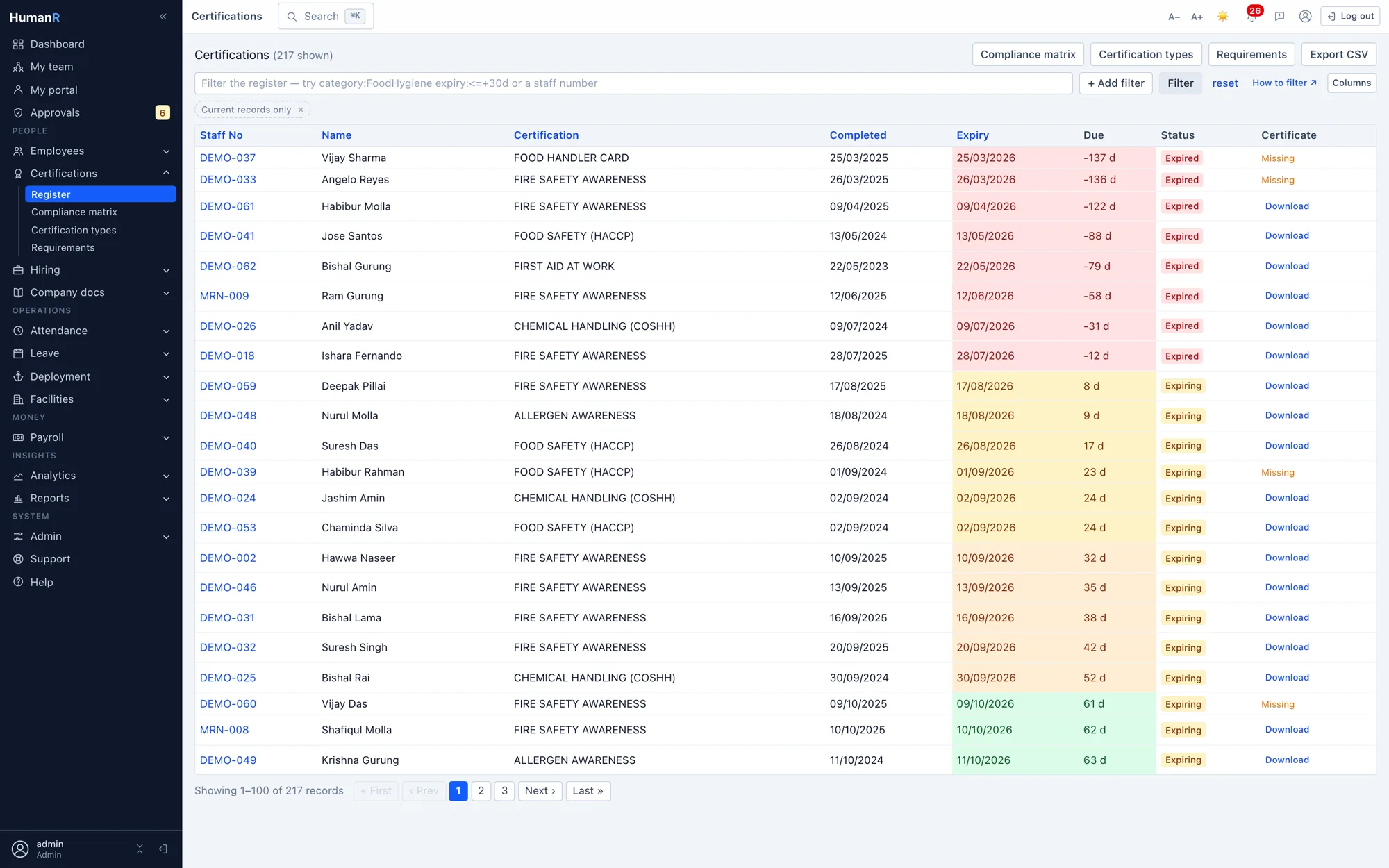
One record per person per credential, with the certificate attached
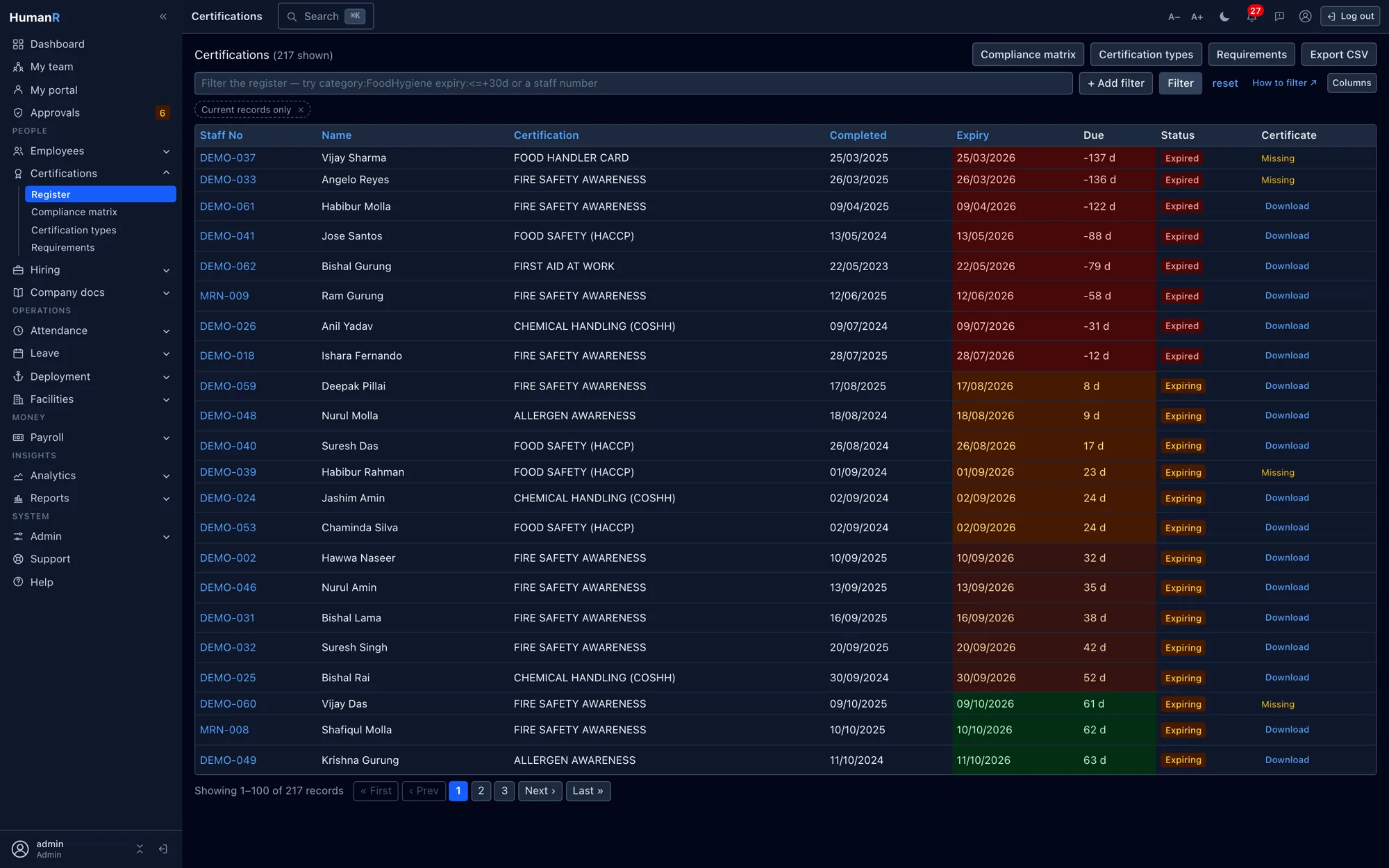
Completion date, issuing provider, the named assessor for internally-run sessions, result, score, contact hours and the scanned certificate itself. Cost is recorded too, behind the same pay permission that guards salaries.
Requirements attached to role, department, site or company
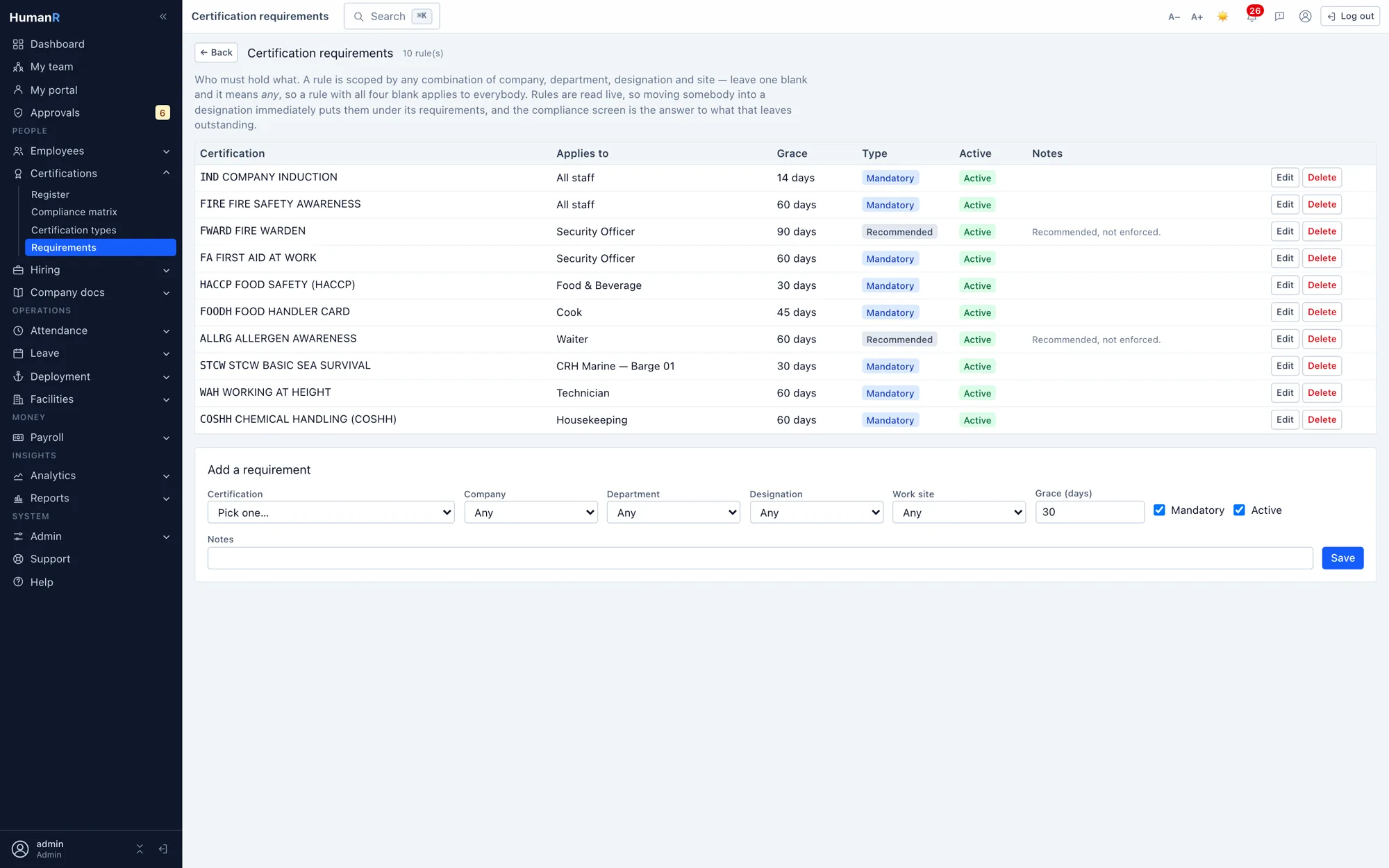
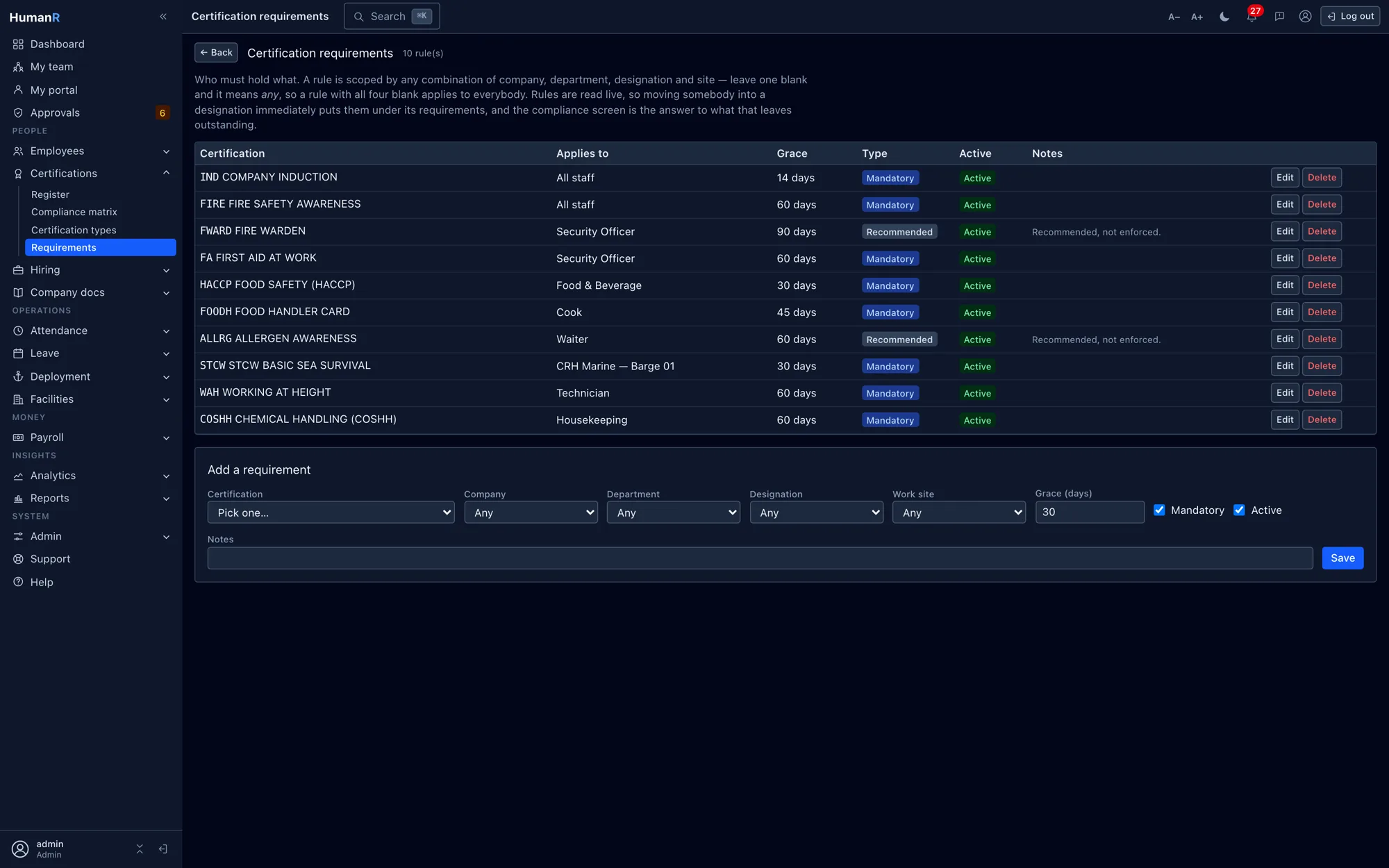
A rule says chefs need HACCP, or that everyone on the marine site needs sea survival, or that every employee does the induction. Rules combine across all four axes, and each carries a grace period so a new arrival is not a breach on their first morning.
The compliance grid
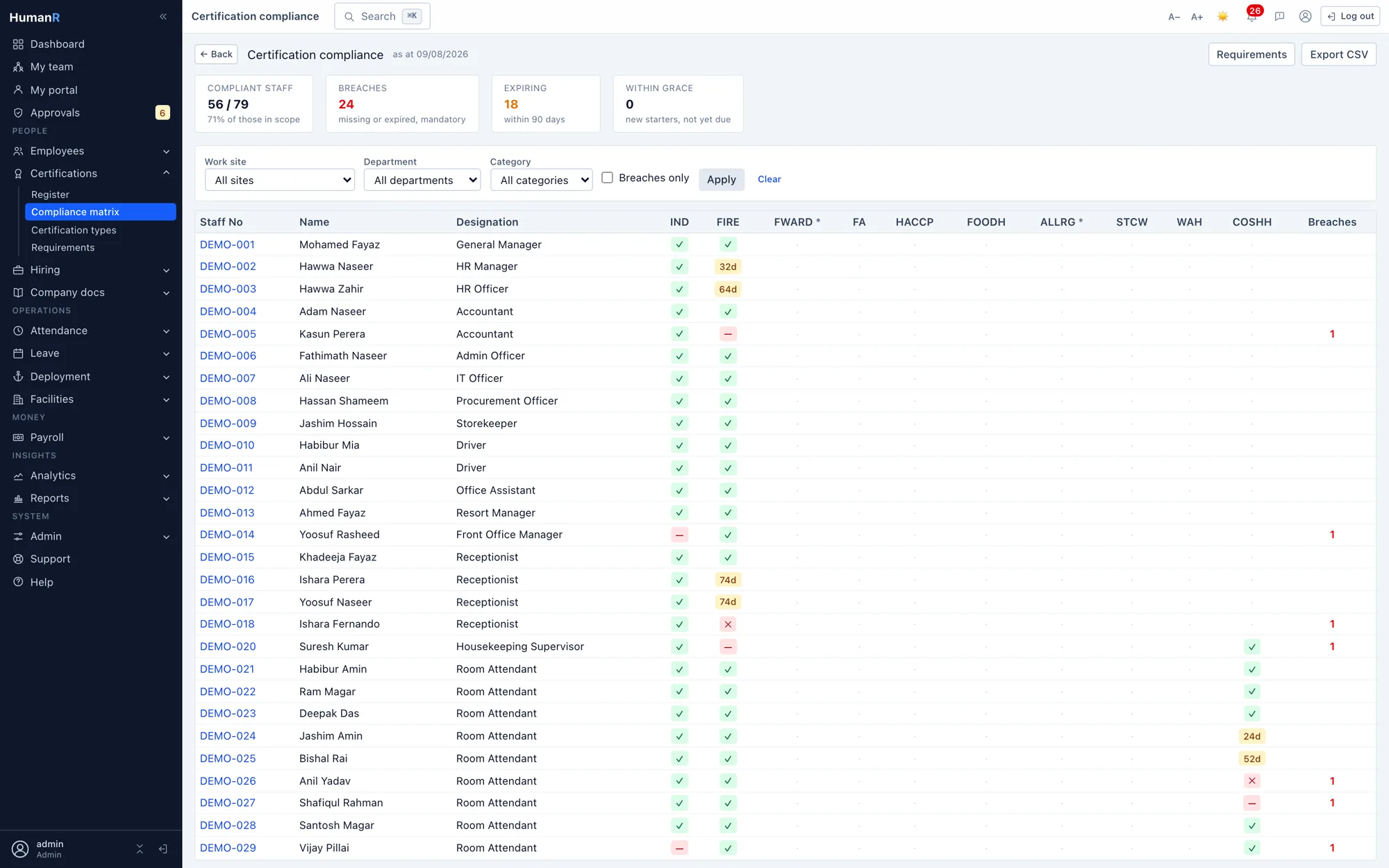
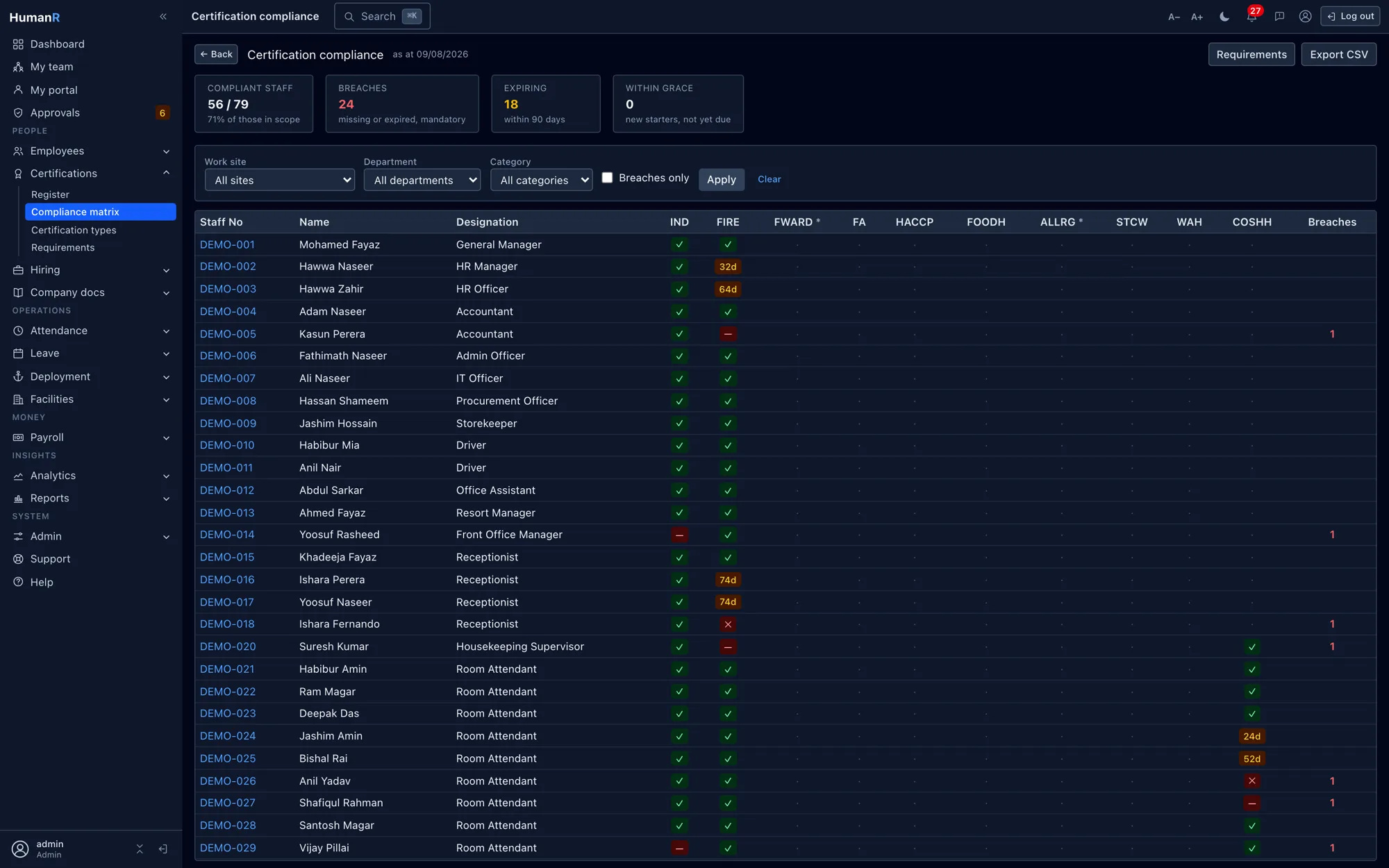
People down the side, requirements across the top, and every cell one of held, expiring, expired, missing or still inside grace. Headline counts sit above it — staff covered, breaches, expiring soon — so the question 'are we inspection-ready' is answered before you scroll.
Renewals that start weeks out, not the week after
Anything inside 90 days of lapsing is flagged on the grid and chased by the same nightly pass that handles passports and permits, through the same digest. The badge on the screen and the alert in the inbox use the same horizon on purpose — if they disagreed about what is urgent, people would stop trusting both.
Renewals chain instead of piling up
A renewal is recorded as a new record pointing at the one it replaces, so the history reads first issue, then each renewal, in order — while 'does this person hold it today' stays a single unambiguous answer.
Advisory rules that inform without crying wolf
A requirement can be a recommendation rather than a mandate: it still appears as a column and still shows who is missing it, but it never counts against the breach total. The number at the top of the screen stays one people act on.
Employees see their own
Through the self-service portal, staff can see what they hold, what is expiring and what their role still requires — so chasing a renewal is not always HR's job to start.
Exportable for the auditor
The register and the compliance grid both export to a file, filtered exactly as they are on screen, so the evidence pack for an inspection is a download rather than a project.
Straight from the product
Real screens from the demo company — the same system your login opens.
Works best with
ދަސްކޮށްދިނުމާއި ތަމްރީނު
ބޭނުން ގޮތަކަށް ދަސްކޮށްދެއްވާ — ރެކޯޑް ޖަމާވާނީ އެއް ރަޖިސްޓަރީއަކަށެވެ
Explore →މެޑިކަލް ފިޓްނަސްއާއި އިންޝުއަރެންސް
މަސައްކަތަށް ފިޓީ ކާކުތޯ، ކަވަރ ލިބިފައިވަނީ ކާކަށްތޯ، އަދި ދެކަން ވެސް ނެތީ ކާކުތޯ
Explore →މުވައްޒަފުންގެ ރެކޯޑާއި ކޮމްޕްލަޔަންސް
ކޮންމެ މުވައްޒަފެއް، ކޮންމެ ލިޔުމެއް، މުއްދަތު ހަމަވާ ކޮންމެ ތާރީޚެއް — އެއް މަޞްދަރެއްގައި
Explore →ސައިޓާއި ކްރޫ އޮޕަރޭޝަންސް
ކާކު ކޮންތާކުތޯ، ނިދަނީ ކޮން އެނދެއްގައިތޯ، އަޅައިގެން ހުރީ ކާކުގެ ހެލްމެޓެއްތޯ
Explore →ރިޕޯޓާއި އެނަލިޓިކްސް
އެޗްއާރަށް ދުވާލަކު ކުރިމަތިވާ ސުވާލުތައް — ހަފުތާއަކުން ނޫން، ވަގުތުން ޖަވާބުދެވޭ
Explore →Questions
Can we track training that has no certificate?
Yes. A toolbox talk or a drill is recorded as attended rather than passed, with hours against it and no certificate expected — and it still counts as held for a requirement. Credentials that genuinely have no expiry, like a trade diploma, are marked as non-expiring and the nightly scan skips them entirely.
What stops the compliance screen becoming a wall of red?
Two things, both deliberate. New hires get a grace window from their joining date before a missing credential counts as a breach, and requirements you want to encourage rather than enforce can be marked advisory, which shows the gap without inflating the count. A breach number that never reads zero gets ignored inside a fortnight, which is exactly how compliance dashboards become worthless.
What happens to a record if we rename a credential?
It flows through, because it is the same credential under a new name. What never changes retroactively is the expiry on a certificate already issued — that date is stored on the record rather than recalculated from the catalogue, so editing a renewal cycle can never silently re-date somebody's existing ticket.
ތިޔަބޭފުޅުންގެ ޑޭޓާއާ އެއްގޮތް ޑޭޓާއަކުން އަމިއްލައަށް ބައްލަވާ
ޑެމޯއަކަށް އެދިވަޑައިގަތުމުން، ފުރިހަމައަށް ޑޭޓާ އަޅާފައިވާ ޑެމޯ ކުންފުންޏަކަށް ވަދެވޭ އަމިއްލަ ލޮގިން އީމެއިލުން ފޮނުވައިދޭނަމެވެ — މިނެޓްކޮޅެއްގެ ތެރޭގައި ޙަޤީޤީ ސްކްރީންތައް، ޙަޤީޤަތާ އެއްގޮތް ޑޭޓާއާއެކު ބައްލަވާލެވޭނެއެވެ.
ކްރެޑިޓް ކާޑެއް ބޭނުމެއް ނުވޭ. ސޭލްސް ކޯލެއް ވެސް ނުޖެހޭ. ޙަޤީޤީ ލޮގިންއެއް، އީމެއިލުން ފޮނުވައިދެނީ.