މެޑިކަލް ފިޓްނަސްއާއި އިންޝުއަރެންސް
މަސައްކަތަށް ފިޓީ ކާކުތޯ، ކަވަރ ލިބިފައިވަނީ ކާކަށްތޯ، އަދި ދެކަން ވެސް ނެތީ ކާކުތޯ
Two registers under one switch. Medical fitness tracks the examinations your people have had, the ones their jobs require, and the gap between — the food-handler card an inspector asks for, the seafarer medical that lets somebody sail. Group insurance tracks the contracts you buy, every life they reach including family, and who is on the roll with no cover at all.
See it live — demo in minutes →Sound familiar?
A food-handler card expired three weeks ago and the kitchen has been running on it
The insurer asks for a member list and it is assembled by hand from four spreadsheets
A new baby is added to the policy in March and nobody notices the child aged off in June
Somebody was cleared 'with restrictions' and only their old manager knows what the restrictions were
Health paperwork sits in a shared drive that far too many people can open
Capabilities
What you get
9 capabilities
An examination catalogue you own
Pre-employment, periodic, food handler, seafarer ENG1/STCW, fitness-to-return and drug & alcohol ship with the app so day one is usable — then you edit them, because validity periods differ by regulator and by client. Each type carries a short code, a validity in months that pre-fills expiry, and whether a certificate is expected at all. A type with history is retired, never deleted: an inspection export must not render a row as an unnamed medical.
A fitness verdict, not a diagnosis
Five outcomes — awaiting certificate, fit, fit with restrictions, temporarily unfit, unfit. There is no field for a condition, a test result or a diagnosis anywhere, and that is a constraint rather than an omission: the employer's legitimate interest stops at whether somebody can safely do the job. The clinical detail stays with the examining clinic.
Requirements that say who owes what
A register of certificates cannot tell you who is missing one, because a gap is the absence of a row. Rules name an examination and up to four scopes — company, department, designation, work site — combined with AND, so 'every cook' and 'deckhands on that vessel' are both one rule. Grace days give a new joiner room before a missing exam counts against them, and a rule can be advisory rather than mandatory.
The compliance matrix, and the export an inspector receives
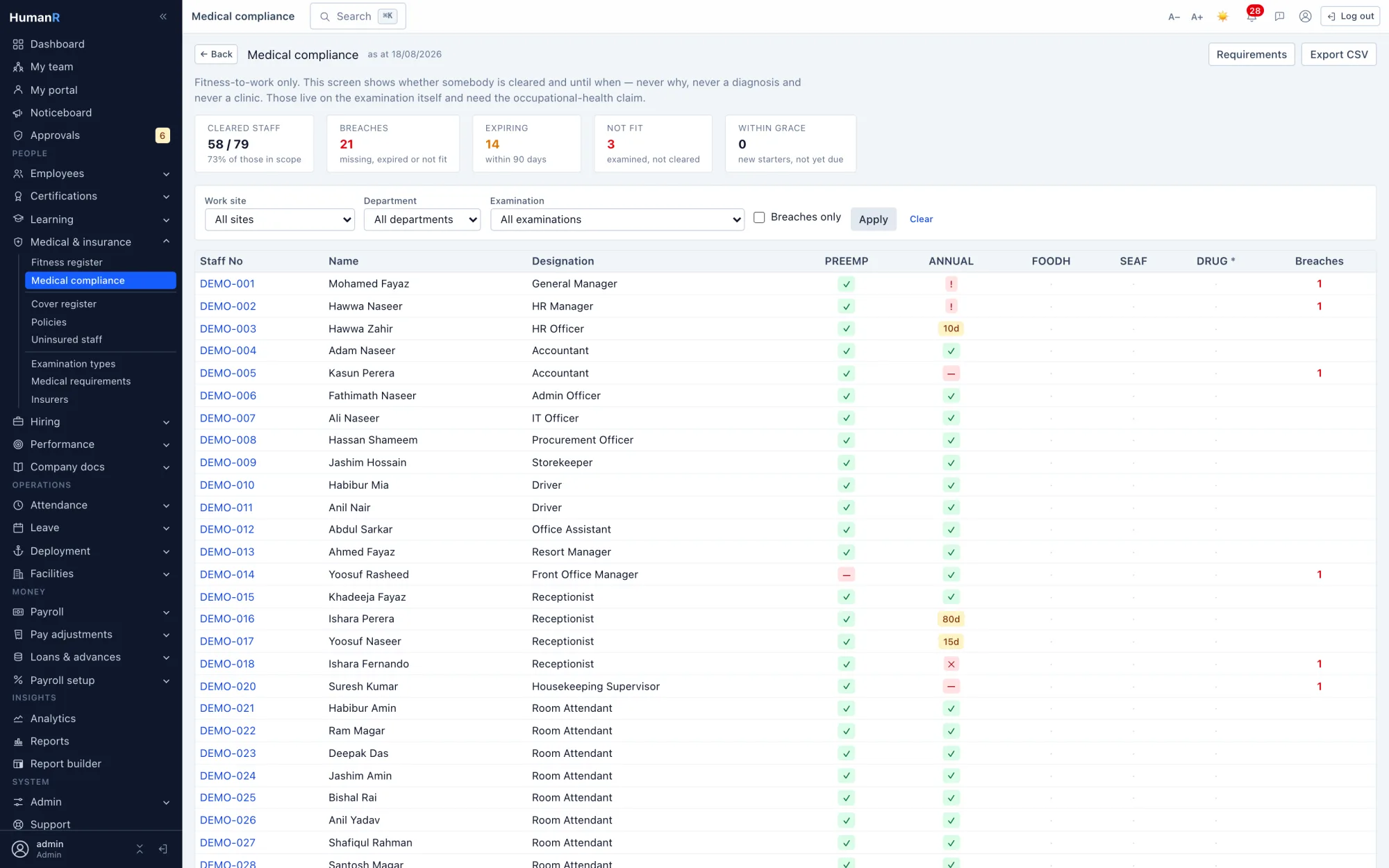
People down the side, requirements across the top, one cell each: valid, expiring with the days left, expired, missing, not cleared, or inside grace. 'Not cleared' is deliberately a different mark from 'missing' — one leads to a booking, the other to a redeployment conversation, and treating them alike is how a compliance screen loses its credibility. The CSV writes one row per person per requirement, because a grid cannot be pivoted by whoever you send it to.
Field-level confidentiality that the matrix never has to trust
Reading verdicts, dates and status is one permission; restrictions, clinic name, certificate number and the certificate file itself need occupational-health clearance on top; cost sits behind the same pay permission as salaries. The compliance grid is built from verdicts and dates alone, so everybody who opens it sees the same picture and no mask is being relied on to hide anything. Exports drop gated columns entirely rather than filling them with bullets.
Insurers, policies and the badge that tells you where each stands
The insurer is a row rather than a name retyped on every policy — because it survives renewals that the policy number does not, and because 'cost by insurer' stops meaning anything the moment somebody types both 'Allied' and 'Allied Insurance'. Policies carry cover type, term, sum insured per life, the child age-off, the renewal-notice window, the broker and the document, and read as upcoming, active, expiring soon, expired or superseded.
Renewals that chain instead of overwriting
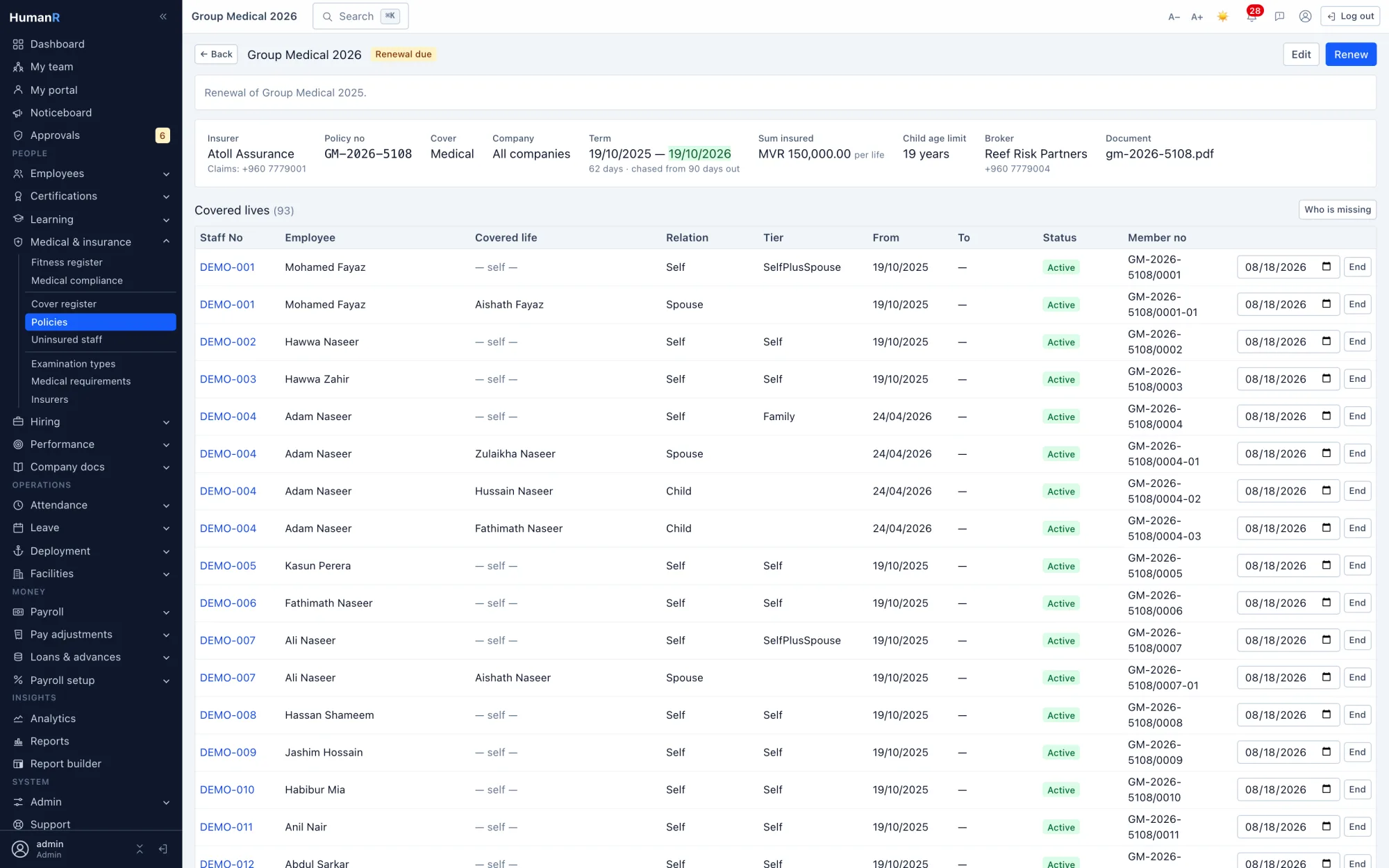
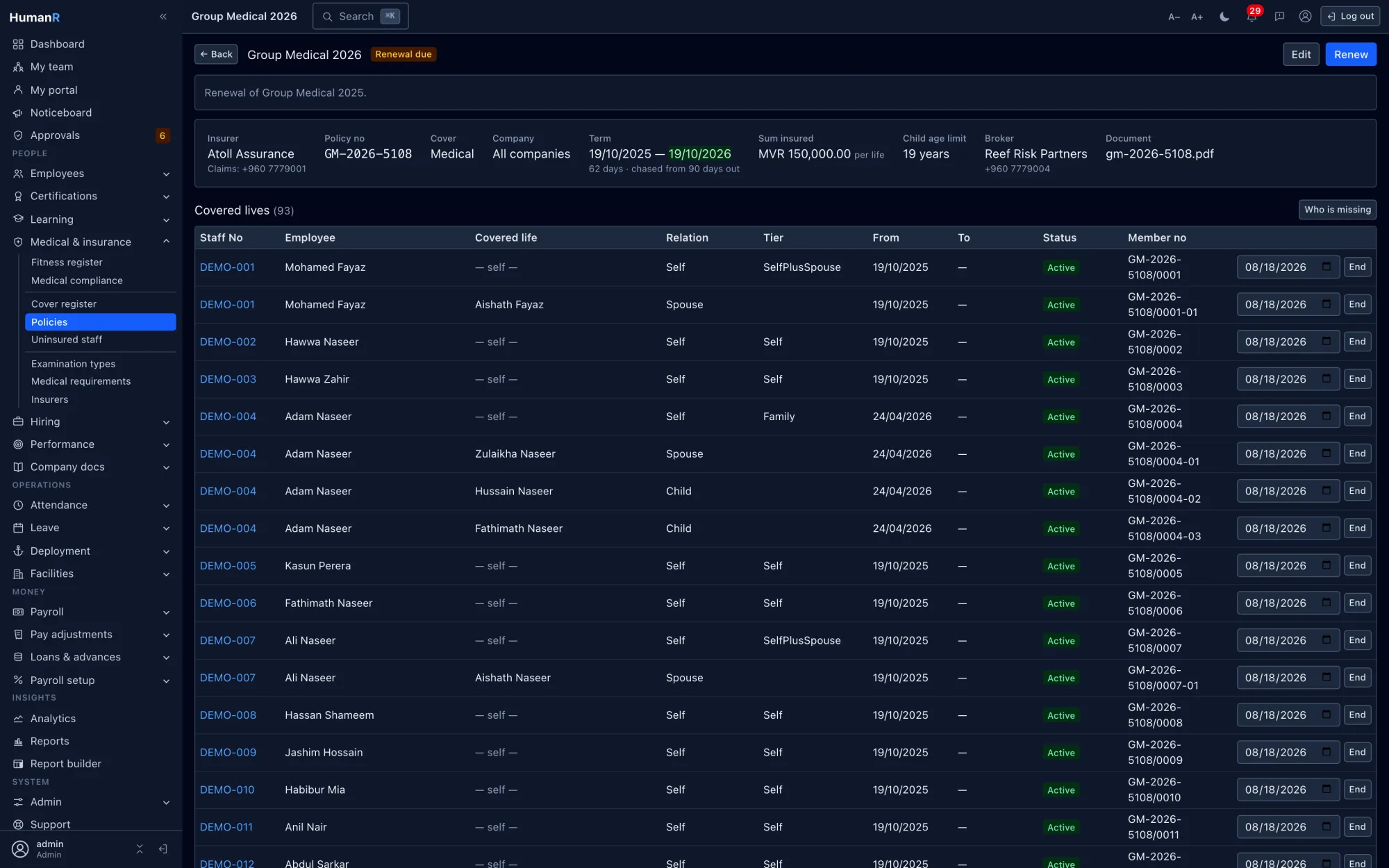
A renewal is a new policy pointing at the one it replaces, never an edit of last year's dates — claims are settled months after the period they belong to, and overwriting the dates destroys the evidence somebody was covered when they claimed. Filing next year's contract early does not end this year's: cover ends on its end date and nothing else. The new policy then offers to carry the covered lives across, and tells you exactly who it left behind and why.
One row per covered life, family included
Enrolment happens on the employee's card rather than on the policy, because adding a life needs that person's family list. The cover tier — self, self plus spouse, family — is counted from the rows rather than typed, so it cannot disagree with reality the moment a child is added. Member numbers and card scans sit behind the personal-data permission, because they identify a named person to an insurer.
The gaps list, and what staff see
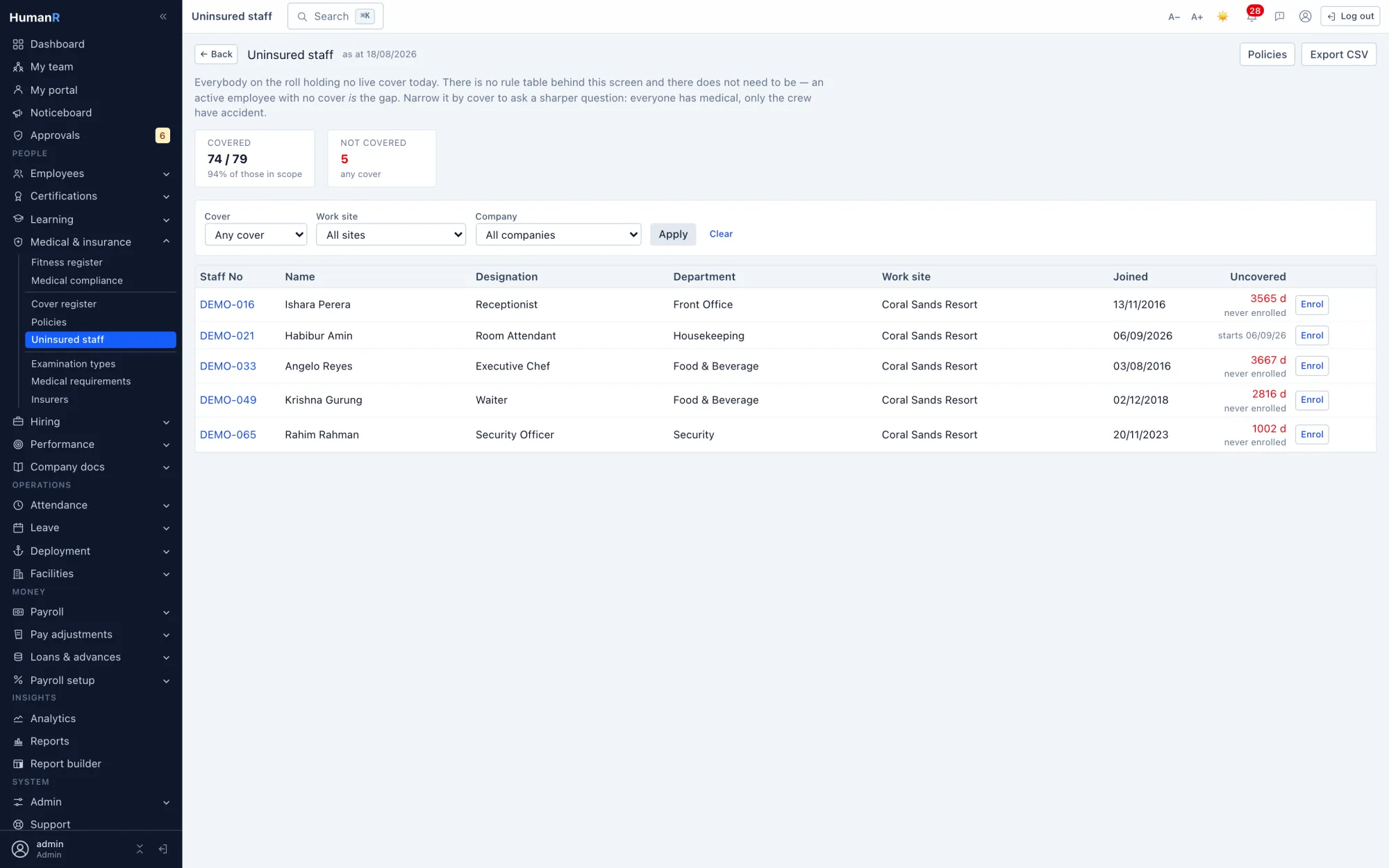
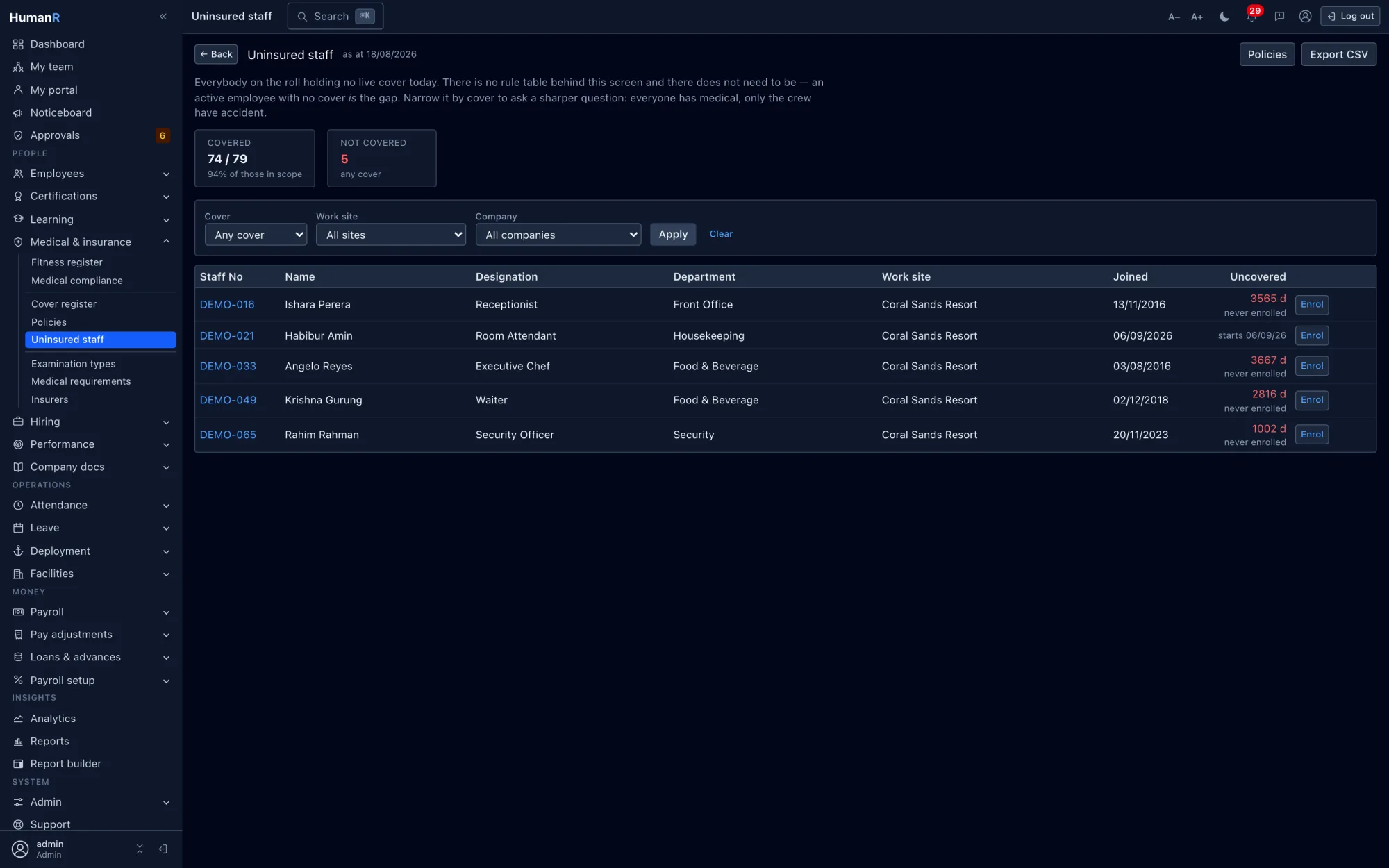
A standing list of everyone on the roll holding no cover today — the question a benefits administrator is actually asked. Staff see their own cover in the portal, with the claims hotline as a tap-to-call button and a link to the insurer's own network of clinics, because the insurer's page is right today and a list we copied is wrong the month a clinic leaves.
Straight from the product
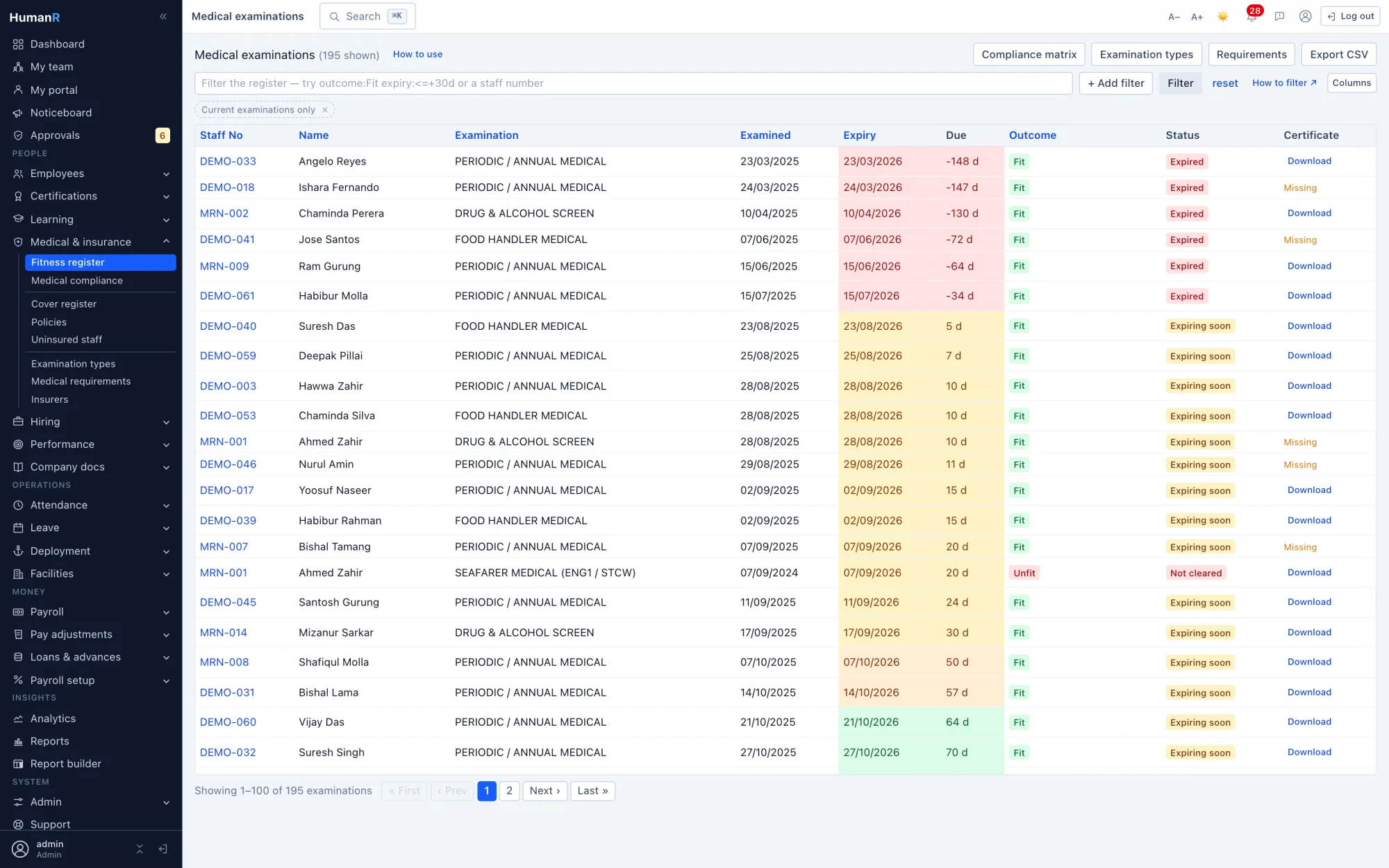
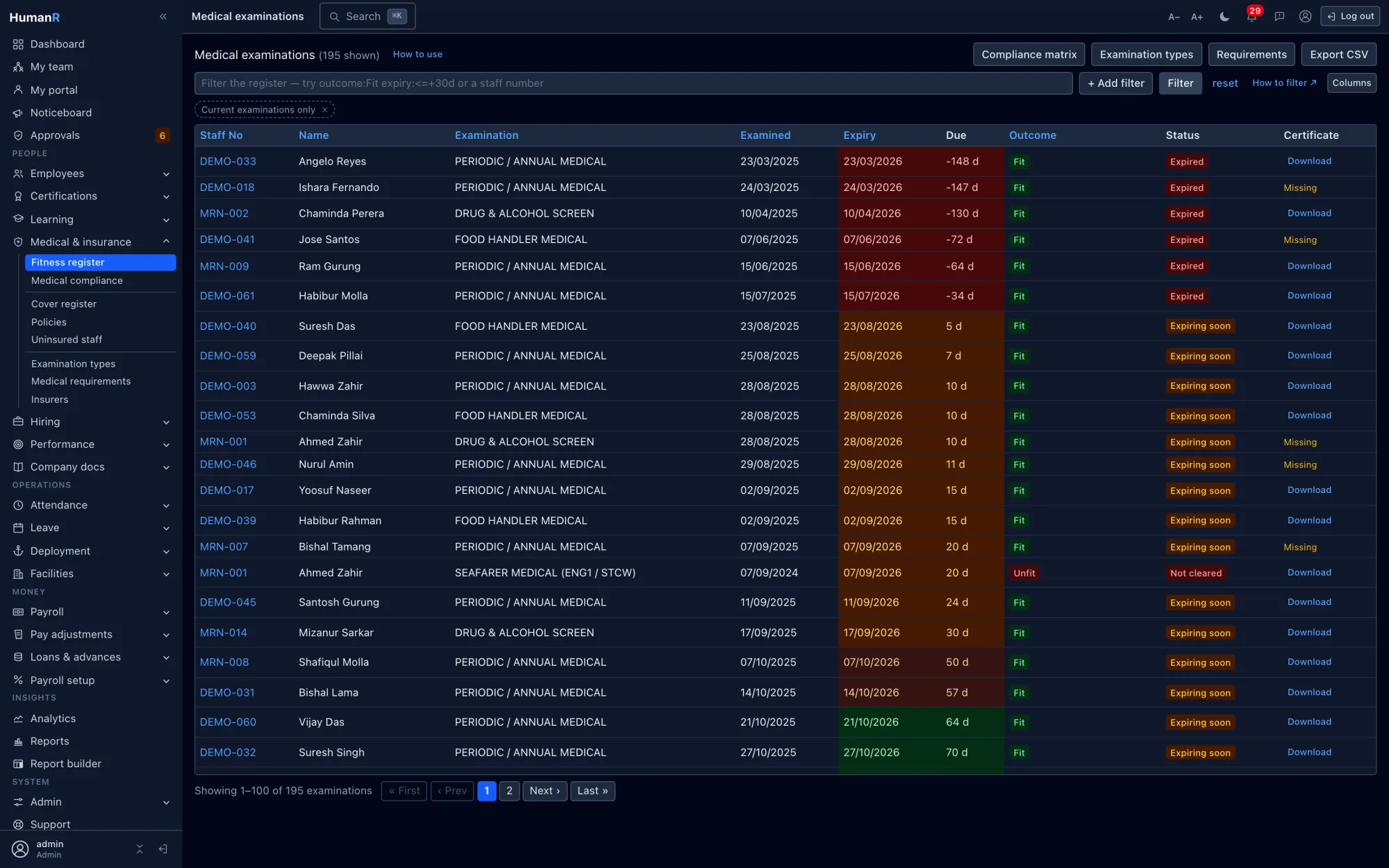
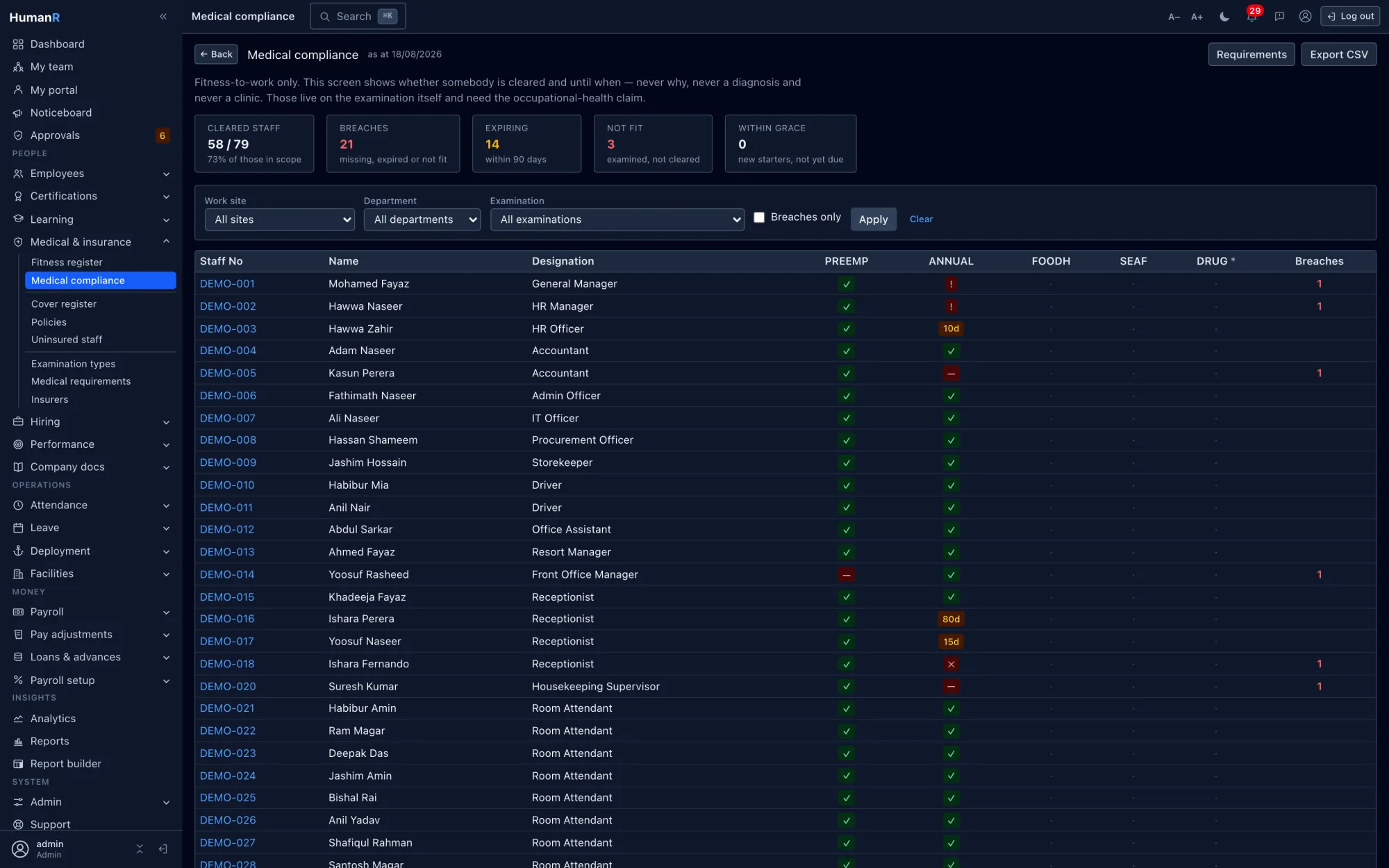
Real screens from the demo company — the same system your login opens.
Works best with
މުވައްޒަފުންގެ ރެކޯޑާއި ކޮމްޕްލަޔަންސް
ކޮންމެ މުވައްޒަފެއް، ކޮންމެ ލިޔުމެއް، މުއްދަތު ހަމަވާ ކޮންމެ ތާރީޚެއް — އެއް މަޞްދަރެއްގައި
Explore →ސެޓްފިކެޓާއި ތަމްރީނު
މުވައްޒަފުންގެ އަތުގައި އޮތް އެއްޗާއި، މަޤާމުން ބޭނުންވާ އެއްޗާއި، ދޭތެރޭގައި އޮތް ފަރަގު
Explore →ރިޕޯޓާއި އެނަލިޓިކްސް
އެޗްއާރަށް ދުވާލަކު ކުރިމަތިވާ ސުވާލުތައް — ހަފުތާއަކުން ނޫން، ވަގުތުން ޖަވާބުދެވޭ
Explore →Questions
Does this store medical records?
No, and it will not. It stores a fitness-to-work decision, its dates, and any restrictions attached to it — 'fit, no night shifts, expires March 2027'. There is nowhere to type a condition, a result or a diagnosis. Health data is special-category data and the clinical file belongs with the clinic; what an employer needs is whether the person can do the job and until when.
Can HR run the medical side without seeing the insurance side?
Yes — they are two permissions on purpose, because occupational health holds data benefits administration has no business reading, and the two jobs usually sit with two different people. Where one person does both, grant both. And within medical there is a second line: the verdict and the dates are one permission, while the restrictions, the clinic and the certificate file need occupational-health clearance on top.
What happens when we change insurer?
You record a new policy rather than a renewal — a renewal chain has to stay with the same insurer and the same cover, because a chain that jumps between contracts is a filing error rather than history. The old policy runs to its end date and closes as expired or superseded, and the lives on it stay on it: that record is the evidence those people were insured for that period, and it is why the policy cannot be deleted while they are on it.
Is this the same as the certification register?
They answer the same shape of question about different things, and they stay separate deliberately. A certification is something a person earned and holds — HACCP, sea survival — and it travels with them. A medical is a decision somebody else made about them on a date, it is special-category data, and it needs a confidentiality model a training certificate does not. Both feed compliance grids that read the same way.
ތިޔަބޭފުޅުންގެ ޑޭޓާއާ އެއްގޮތް ޑޭޓާއަކުން އަމިއްލައަށް ބައްލަވާ
ޑެމޯއަކަށް އެދިވަޑައިގަތުމުން، ފުރިހަމައަށް ޑޭޓާ އަޅާފައިވާ ޑެމޯ ކުންފުންޏަކަށް ވަދެވޭ އަމިއްލަ ލޮގިން އީމެއިލުން ފޮނުވައިދޭނަމެވެ — މިނެޓްކޮޅެއްގެ ތެރޭގައި ޙަޤީޤީ ސްކްރީންތައް، ޙަޤީޤަތާ އެއްގޮތް ޑޭޓާއާއެކު ބައްލަވާލެވޭނެއެވެ.
ކްރެޑިޓް ކާޑެއް ބޭނުމެއް ނުވޭ. ސޭލްސް ކޯލެއް ވެސް ނުޖެހޭ. ޙަޤީޤީ ލޮގިންއެއް، އީމެއިލުން ފޮނުވައިދެނީ.